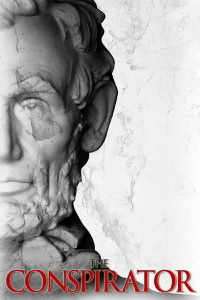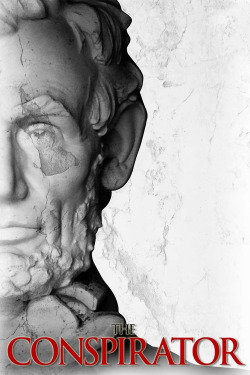
Review of The Conspirator (2011) by Jean-Paul S — 24 Aug 2011
After the Bits We Know.
Perhaps a warning label ought to come with the film--"Warning: This Movie Will Expect You to Know Your Own Country's History." Because at the beginning, certain facts are shown but not explained. Everyone Knows that John Wilkes Booth assassinated President Abraham Lincoln one night in Ford's Theatre (sick joke: "But other than that, Mrs. Lincoln, what did you think of the play?"). Indeed, to Booth's horror, even within days of the event, it rapidly made Lincoln one of the most beloved figures in American history. And the death of Lincoln is one of the things shown in the first few minutes of the film. Unfortunately for most of the viewers, so is the attack on William Seward. And I'm willing to bet that ninety percent of you don't even know who that is. If you do, it's probably only a vague memory of "Seward's Folly." The problem here is that the film assumes you will already know much of the background to its story, and few people seem to.
In the aftermath of Lincoln's assassination, the Department of War (as it was known at the time) took over the investigation, and the trial of the conspirators would be a military tribunal. One of the accused, Mary Surratt (Robin Wright), ran the boardinghouse where the conspirators met. Her son, John (Johnny Simmons), was a close personal friend of John Wilkes Booth (Toby Kebbell). Mrs. Surratt is arrested on the grounds that she must have known what was going on and didn't do anything to stop it. At first, her attorney is Maryland Senator Reverdy Johnson (Tom Wilkinson), but of course Johnson's loyalty is rapidly put in doubt. He therefore assigns the case to a young lawyer in his firm, Frederick Aiken (James McAvoy), himself a captain in the Union Army. At first, Aiken refuses, but gradually, he comes around to the opinion that, no matter whether she's guilty or innocent, Mrs. Surratt deserves a true defense.
The claim, back in 1865, was that the lengthy process of a civilian trial would only prolong the national suffering. Personally, I would argue that the aftereffects of the military tribunal of those defendants have been if anything a greater cause of suffering. It was decided that it was best for the country if the roots of the conspiracy could be rooted out, by which it was meant "if the Confederate government can possibly be found guilty." The rights of the defendants weren't taken into consideration; it was said that, by killing Lincoln, they had given up their rights. Never mind that one of the basic rights of Americans is the right to a presumption of innocence. The excuse tends to be that we were in a time of national trauma, which is certainly true, but that wasn't enough of an excuse for Mary Surratt. She was actually forbidden to testify in her own defense, and she didn't have a chance to meet with her counsel before the tribunal. By giving her the rights to which she was entitled, we could have shown the better nature of our country.
In fact, her guilt or innocence is one of the only two from that particular trial which is still in any doubt. She and Samuel Mudd (uncredited even on IMDB, though he's in the courtroom scene) are still debated to this day. Indeed, the movie really only takes the stance that her guilt ought not to have been presumed and that she was held in no small part because her son had run off and could not be found. Neither of these are historically controversial positions. One of the characters makes the observation that either she knew what was going on or else she should have, which is also relatively uncontroversial. Even the idea that two of the witnesses against her were intimidated into the position by the government isn't shocking. Indeed, I would say not much about the movie is terribly surprising, if you know the history behind it. This seems to be the point, so far as the production company is concerned.
I'll admit that I think Mary Surratt was probably innocent, but as Robin Wright portrays her, it doesn't matter. Robin Wright's Surratt is pale and thin, a woman who has suffered in ways she does not wish to share with the world. She believed in her country, and her country is gone. She cared about her son, and her son has betrayed her. She still believes in keeping his secret. That this leaves her daughter, Anna (Evan Rachel Wood), unprotected does not matter; if John escapes, he can care for her. (Which he only sort of did; the whole experience seems to have been very bad for her.) James McAvoy has made most of a career on watching the world happen to other people, but when we first meet Mary Surratt, there is nothing to be done for her. The people in authority do not feel able to release her, but at the same time, they do not feel comfortable in having her hang. Unfortunately for her, Edwin Stanton (Kevin Kline) has decided that she will do just that. Robin Wright portrays beautiful resignation, the only position left for her.
This review of The Conspirator (2011) was written by Jean-Paul S on 24 Aug 2011.
The Conspirator has generally received positive reviews.
Was this review helpful?