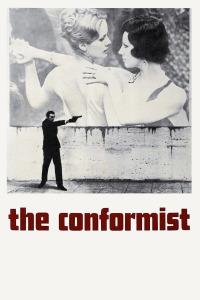
Review of The Conformist (1971) by Evan K — 03 Feb 2016
In The Conformist, Marcello, the protagonist, is forced to come to terms with himself and discover his place in society. However, this is not an easy task as Marcello has difficulties balancing his childhood experiences with the modern day influences of Fascism. The events of his youth inspire him to scratch the life of the past and comply with accepted social conventions, such as marriage and adherence to the fascist government. Nevertheless, the reliance on these customs plunges Marcello into a life characterized by loneliness and alienation.
Traumatizing events in Marcello's childhood inspire him to become a normal individual and seek belonging. In a flashback, Marcello's homosexual nature is displayed when a chauffeur, Lino, tries to seduce him. Instead of trying to escape this awkward situation, he chooses to be seduced and is comfortable with the idea of participating in homosexual acts. However, this confrontation is quickly nullified as Marcello tries to murder Lino. These two instances are not the only troubling things in Marcello's childhood. He felt the effects of seclusion due to his family's wealth, suffered brutal beatings and humiliations at school, and witnessed his mother abusing drugs. All of these occurrences in Marcello's childhood create the desire for him to become ordinary and evade isolation.
Marcello tries to achieve the normalcy that he craves through marriage, but he fails to feel any belonging and escape his loneliness. By societal standards, men need to feel attracted to women to be considered normal. The societal pressures force him into making this decision to marry Giulia, a young bourgeois. Needing the consent of Giulia's parents, he must act against his will and go to confession even though he is an atheist. The true nature of Marcello's intentions are revealed when he freely admits that he doesn't think highly of Giulia. Throughout the film, he hardly has sex with her and often times neglects her. He even commits adultery, displaying his emotional detachment. These actions indicate that Marcello's only purpose for marriage is to conform to societal standards. Consequently, he fails to be a good husband and remains lonely.
Next, Marcello attempts to adopt the role of a devoted fascist only to fail, again, at fitting in and escaping isolation. By abiding to the fascist regime, Marcello is attempting to become socially accepted. Marcello is sent on a mission to assassinate his old college mentor and friend Professor Quadri, an anti-fascist. He clearly does not want to murder his former professor but plans to do so anyway because he is lured by conformity. The decision to carry out the crime is the point at which he fails to become normal; murder is not something that is considered to be an established norm. By being a loyal fascist, Marcello hopes to fit in with the rest of society and evade loneliness, but he ultimately fails by committing a homicide.
Despite the intentions of Marcello to become a normal citizen, he ends up failing miserably. He's supposed to be happy; he's supposed to feel like he belongs. However, the two roles that he assumed, married man and fascist, are the cause of his loneliness. A normal man would not cheat on his spouse, and he certainly wouldn't partake in a murder either. The marriage and fascist involvement do Marcello more harm than good. At the end of the film, he is not in the company of his wife or his fascist comrades. Instead, he is left alone, staring into darkness.
This review of The Conformist (1971) was written by Evan K on 03 Feb 2016.
The Conformist has generally received very positive reviews.
Was this review helpful?