Review of The Conformist (1971) by Arshi R — 06 Mar 2010
The Greatest Films, a Review.
Grade: A+.
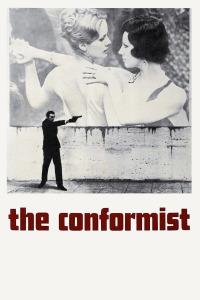
Bernardo Bertolucci, a master of direction, camera movement, as well as a stickler for immaculate art direction, has here created perhaps his most beautiful film; to look at, that is.
Like the films title suggests, the film is about a Conformist named Marcello Clerici, in this case in 1938 Italy when the fascists were taking over. The film is about his relationship with various people most noteably his wife, his old college professor (whom his superiors have ordered him to assasinate), and his professor's wife. This mission he is on has led him to France, where the anti-facist professor and his wife live.
The film examines without banging ideas over our head the internal struggle that the character faces as he comes head on with moral dilammas about what is right or wrong, good or bad; the film offers up realistic and difficult answers, with nary a trace of hollywood softness.
Along for the trip to paris is the conformists wife Giulia. She is a middle class women for a normal and boring guy, and that's basically his reason for marrying her. Her character is developed in interesting ways as well, which helps in creating a clearer picture in the viewers eyes of the kinds of moral's and norms a past society such as this would have to be turning towards, in order to accept the radicalism of facism. Her story about how she lost her virginity is particularly affecting.
One of the films strenghts is that Marcello's character develops such rich and purposful relationships with the surrounding characters, that help flesh out the story and give it a slightly episodic feel. The film has some great flashbacks, one of which is when we see Marcello as a 13 year old, a moment that could've changed his life.
Marcello's mother and father play a role in the film as well; his father is in a mental hospital, and his mother is at home, rotting. After a scene where they visit the father, we wonder if perhaps it was facism itself that sent him to the loony bin.
The cinematography is unbelievable, with a few highly innovative camera zooms (with an object simultaneously moving toward the camera), as well great tilt angle shots, tracking shots, and ultra quick zoom in/zoom outs. A hand-held camera sequence near the end is so well executed, and its importance so key to the plot as well.
Similarly, the lighting is nearly perfect; the scene where Marcello and The Professor finally meet again in his office is of particular note, but its not the only instance.
I don't want to tell you how the film unfolds, because you should really want to find out all that stuff without me spoiling it. Suffice it to say what we all know anyways, and that is that the war ends, Mussolini and facism fall, and, in the words of Giula & Marcell:
Giula: "But why do you have to go?".
Marcello: "I have to see how a dictatorship falls.".
This review of The Conformist (1971) was written by Arshi R on 06 Mar 2010.
The Conformist has generally received very positive reviews.
Was this review helpful?