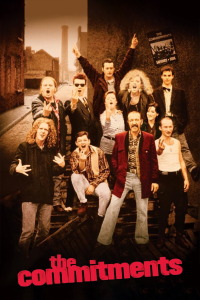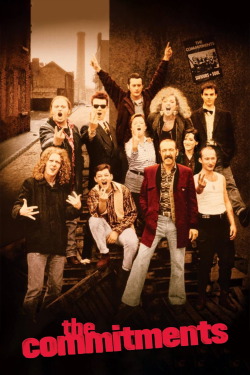
Review of The Commitments (1991) by Spangle — 09 Jan 2017
Thelma & Louise is a film that is not hard to grasp. Criticized as anti-male upon its release in 1991, it is clear that the feminist message of the film was a bit much for some. However, the film is not as much feminist as it is a film that pulls back the curtain on the patriarchy in cartoonish fashion. With every male character essentially a caricature of a certain aspect of the patriarchy, Thelma & Louise is, on the surface, just a female buddy film. A road movie, it is essentially a dual female take on Bonnie & Clyde with Thelma (Geena Davis) and Louise (Susan Sarandon) committing through crimes throughout the southwest United States and trying to outrun the cops. In the film, director Ridley Scott explores various elements of the way in patriarchal thought has corrupted society and highlights the attempts of men to control, possess, protect, abuse, rape, and harass women due to the belief that women are subordinate to men.
To showcase each element, Scott creates plot devices to fulfill each attack on women that men commit. The most apparent is control. With Thelma & Louise on the run, the men around them try to control them, but not as much as the police. As they are criminals, the police issue a manhunt for them to try and find them, with little worry as to whether or not they are dead or alive. Of course, they are criminals, thus they are interested in finding them. However, the greatest crime they commit is stepping out of the acceptable behavior for women. The cops immediately assume the worst of the women, running straight to their husbands and boyfriends to try and reign them in and bring them back to normalcy. It does not hurt either that all of the cops are white men. As white men are seen as the most privileged members of society, they are often the aggressors in crimes against women. Thelma & Louise highlights this element with all of the cops being white men who take these crimes as a personal affront and send an absurd amount of cops to try and capture these two women. As predicted by Louise, the men are unconcerned with the circumstances of her shooting Harlan (Timothy Carhart). Though he was raping Thelma and was acting aggressive towards the women, it is hardly a concern because Thelma was likely "asking for it", thus she could not be raped. The biggest concern is that a fellow white male was executed for simply trying to claim his prize. As such, it is up to all of the white men in the police force to bring these nasty women to task for their crime. However, it is in this section that the film shows how it is not anti-male. With Thelma and Louise having locked up one of their oppressors in a trunk of a cop car, a black male smoking marijuana finds the car and, instead of helping the cop, blows smoke into the car. This scene establishes that while Thelma & Louise may be about women fighting back against white men, it is equally a film about highlighting the oppression that all groups considered "lesser" must endure in modern day America.
The control of the cops transitions well into the protectiveness men feel for women. The lead detective on the case is Detective Hal Slocumb (Harvey Keitel). While all of the other men are gung ho about getting and killing these women, Hal preaches amnesty. He does not want these women harmed and is not afraid to express this opinion. At the end, when they are driving off into the Grand Canyon, he chases after that, hoping to save them from their own demise. An off-shoot of controlling women, men have an inherent nature to protect women. In 2017, this has led to "white knights" or prototypical "nice guys" who see themselves as a sort of savior of womenkind, prepared to show them generosity and kindness that they have not seen before. In the film, Hal very much fills this role. As a cop, he should be trying his best to capture these women, but instead opts to take on a protective role and tries to shield them from the dangers of the men he works with. Unfortunately, his tactic is hardly wholesome as he still wants to arrest them, so at his core, he still wishes to exert control on these wily women.
The reason these women are in this position, however, is because of the attempted rape of Thelma by Harlan. An essential part of any film about the patriarchy and its dangers, rape and rape culture must be discussed. Killed by Louise for his crime, Louise knows that rape culture dictates that Thelma asked for it, considering she has been dancing with Harlan. Thus, the controlling and protective cops are not an option for these two. While Harlan very literally wished to force himself upon Thelma, the symbolic implications of rape are far greater and shows how women are raped by men on a daily basis. Whether it be actual rape, visual rape, or the violent seizure of their independence and rights. Here, Scott opts for the very visceral scene of rape, but Harlan is hardly the only man to rape a woman in this film.
This review of The Commitments (1991) was written by Spangle on 09 Jan 2017.
The Commitments has generally received positive reviews.
Was this review helpful?