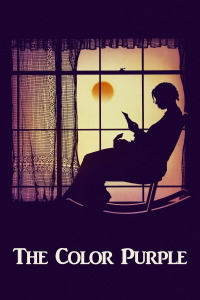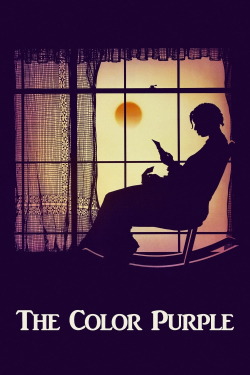
Review of The Color Purple (1985) by Jon N — 07 May 2009
WARNING! THE FOLLOWING REVIEW CONTAINS MAJOR SPOILERS! READ ON AT YOUR OWN RISK!
The first half hour of The Color Purple is extremely flimsy, plot-wise. There is only one interesting situation in that time, when Mister (Danny Glover) attempts to rape Nettie The plot picks up at last right before Whoopi Goldberg takes over as Celie, who has until now been played by a rather un-likeable, amateurish actress. Here is the scene that kicks this huge improvement off: as young Celie prepares to shave Mister, he tells her he will kill her if she cuts him. Suddenly, she becomes terrified, and extremely uncomfortable close-ups of the razor going across Misterâ??s neck are employed to their maximum potential.
From then on, the plot constantly skyrockets further, except for one bit. After escaping from a fight in the local â??juke-jointâ??, Celie and a character named Shug have a woman-to-woman moment. Now, Iâ??m not a big fan of such â??girlyâ?? (as I like to call them) scenes. All of a sudden, to my alarm, Shug began to kiss Celie, and a few shots suggest just what goes on off-screen. I was rather alarmed. This movieâ??s plot had plenty of promise by now: was it going to degenerate into a miserable lesbian romance film, when I was most interested in Celieâ??s relationship with her abusive husband, Mister? Luckily, it did not linger on this for long. Spielberg admitted in an interview he regretted toning down the lesbian romance from the original novel, but I think this was a good choice: after wasting enough time, we get back to what weâ??re really interested in, and thatâ??s the central conflict between Celie and Mister.
(By the way, the author of the novel, Alice Walker, initially was displeased at the adaptation. After an enthusiastic audience reaction at premiere, however, she changed her mind and loved it. Curious, donâ??t you think?).
Whoever knew that Whoopi Goldberg, whom Iâ??ve known mainly for her comedy roles, is such a great serious actress? This marks her film debut, and certainly remains among the finest debuts in film history. Iâ??m not a fan of Oprah Winfrey, either, but here, she does quite a fantastic job as Sofia, a rather hefty woman full of confidence. (The two characters are powerfully contrastedâ??Celie overcomes her abusive husband and the way the world has treated her; Sofia is arrested for an altercation with the Mayor, and after brutal beatings in jail, she emerges with her spirit completely crushed, ending up as a maid to the woman whose job offer led to the arrest in the first place.) Danny Glover proves to be a great villain in this film.
However, for all its charms, The Color Purple is a deeply flawed film. After refusing Misterâ??s sexual advances, Nettie is thrown off his land. She and Celie, however, hold onto each other, refusing to let go. Very touching at first, but the scene dragged on and on and on, and I finally got really bored of the whole â??You-canâ??t-separate-usâ?? moment. Here is perhaps the reason I disliked the first half-hour of the film: the black people are portrayed in a far-from flattering way. The women are treated as commodities (when asking Celieâ??s father permission to marry Nettie, Misterâ??s request is denied, but he is offered Celie instead. He admits he hasnâ??t noticed how she looks like, and so, Celie parades herself in front of him. They get married.). They are also brutally abused for minor things. But after that initial half-hour, we begin to see into these male characters and their motivations: Mister has a father heâ??s afraid to say â??Noâ?? to; he wants to please him desperately, etc. But here is the filmâ??s ultimate flaw: the women are all portrayed as free-spirited, overcoming all the difficulties the world throws at them eventually. But the men are shown as pushovers, weaklings, or to put it bluntly, losers. And another thing: I refuse to believe that black characters who read Oliver Twist would use phrases such as â??I isâ??. It just doesnâ??t work.
As for the musicâ??dear LORD. Quincy Jonesâ?? music is awful. When Celie reads her sisterâ??s letters, it should be HER moment. But Jonesâ?? music just ruins the entire effect of the scene.
But Steven Spielberg proves more than ever his directing capabilities. His masterful intercutting makes the boring task of reading letters into a true cinematic experience. Celie sneaks a letter into her Missal and reads it during the church service. The congregation fades awayâ??except for Celie, who remains, quietly reading. Cut to the front of the church, which is suddenly ploughed through by a bulldozer, which is exactly what was going on in the letter, set in Africa. Itâ??s that kind of cutting that makes the movie so much more exciting. This technique culminates in one of the later scenes, as Celie is about to cut Misterâ??s throat while shaving him. Spielberg cuts from her preparing to kill him to Shug running to stop her to an African sacrificial ritual. The resulting tension is overwhelming. And of course, what other director but Spielberg could make a mailbox into a character with mere camera movement?
Overall, The Color Purple is very entertaining. It was quite publicly snubbed at the â??86 Oscars, grabbing 11 nominations, and winning zero. I give it a thumbs upâ??good? Yes. But far from a masterpiece.
This review of The Color Purple (1985) was written by Jon N on 07 May 2009.
The Color Purple has generally received very positive reviews.
Was this review helpful?