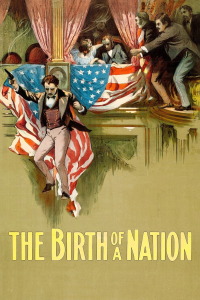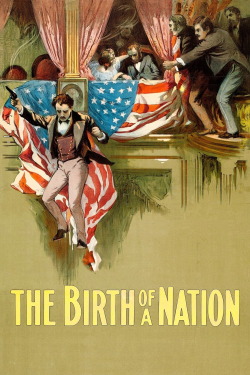
Review of The Birth of a Nation (1915) by Bob B — 04 Mar 2010
There has never quite been a film to rival THE BIRTH OF A NATION (although several, notably films that came out of Nazi Germany like JEW SUSS have come close) in terms of controversy. And for good reason: the film demonizes blacks and lionizes whites, shameless reduces Civil War and Post- Civil War history to a revisionist cowboys and Indians story -- good guys versus bad guys -- and perpetuates ugly stereotypes.
That said -- it's a product of its times. THE BIRTH OF A NATION is a pre- civil rights film, and contains all the politically incorrect themes to go along with that. Although this doesn't justify the subject material, it certainly contributes to an understanding of it. It has been debated ad nauseum whether D.W. Griffith was responsible for the racist overtones, as the story was based on a play not his (Thomas F. Dixon's THE CLANSMEN). In my opinion, it would be reprehensible to think else wise.
If he had truly felt the revulsion that audiences even of the time felt about the play, he wouldn't have sat in the director's chair at the outset. He wasn't coerced (as Leni Riefenstahl, director of TRIUMPH OF THE WILL arguably was) into accepting the charge, and further damnably was the son of a Confederate colonel, a Southern boy through and through. The woe-is-me, wrongly-accused stance he would take later in his career (pointedly titling his next film INTOLERANCE) is not completely honest. In my opinion, Griffith is responsible for everything in THE BIRTH OF A NATION -- both the artistic triumphs and the "unfortunate subject matter.".
That said, there is a certain guilty pleasure in liking THE BIRTH OF A NATION, because despite its explicit racism it is one of the most thrilling films ever made. Cross-cutting techniques, though not pioneered by Griffith, here are used to catalyze parts of the film that might otherwise be slow, and in the film's climax contribute to one of cinema's most pulse-pounding finales.
The film begins with the South as it was in the "good old days," when times were prosperous and people courteous and friendly. Black people are "kept in their place," a position of respectful servitude, and wealthy whites are fashionably conducted throughout town in slave-driven carriages. In the quaint small town of Piedmont, South Carolina, which comes to represent the entirety of the South, Griffith first introduces the Camerons.
Living in a pristine, white-washed clapboard house, the family is fashionably dressed, well-to-do, and -- most of all -- quite obviously happy. When friends, the Stonemans, come down from the North to visit, the family seems fit to burst with joy. The two boys cuff each other playfully, mock-seriously wrestling over trifling things, and the girls chatter merrily. All seems well, even more well than usual, when the festivities are interrupted by a bulletin in the newspaper: "South Will Seceed.".
The families are somewhat sobered by the news, and seem to consider their respective futures, for a moment. But when the Stonemans depart, it seems to be just another parting-of-ways, the sadness dissipated by promises to meet again soon. All is not, and will not be the same, though.
Much as the epochal GONE WITH THE WIND depicts, the South is swathed in Dixie colors and awash with patriotism. Even the women Camerons, busily knitting for the cause, seem to have forgotten their friends up North, of late. Griffith depicts the first few battles, including the Battle of Bull Run, and briefly the impact they have on the patriotic fervor of Piedmont. When Col. Cameron, shortly before leaving to join his regiment, proudly unveils a newly-sewn Confederate flag, the crowd that has gathered goes wild.
The intoxicating nature of war does not completely inveigle the mother of "the little Colonel," though, and it is with great sadness that she bids goodbye to her sons -- a great sacrifice for her country, Griffith duly notes. The rest of the Cameron womenfolk are equally crushed, especially little Margaret, who is thoroughly smitten with her oldest brother. War's ignominious impact -- even before bullets have flown -- has already been felt.
The friends who had once tussled like cubs fight in all seriousness, with a valor none as dubious as their cause. In a fierce battle, all ambushes and desperate last stands, amid whizzing bullets and death-by-mortar, the friends by chance meet again. Struck down by a hail of bullets, the Cameron boy falls to the ground, only to nearly be finished by a bayonet blow from his buxom friend. Having realized who he stood poised to kill, the Stoneman boy stops, his incredulity met with a stray bullet. Wounded in kind, the two make a tragic sight, and a ringing indictment against war.
The other Cameron boy having already died, it is left for "the little Colonel" to tout the Confederate banner for the cause. In an iconic, impeccably orchestrated scene, he desperately leads his battalion on in the face of certain death, heroically jamming Dixie into an enemy cannon. The rival commander being none other than the eldest Stoneman brother, his life is serendipitously spared.
But even while in convalescence in a Union hospital, he is nearly offed by noose, there being a Yankee soldier or two not happy with aiding the enemy. It is there, though, that Col. Ben meets the love of his life, the Stoneman girl whose picture he had carried with him through war.
It was this subplot of love in the face of tragedy that Griffith would use to contrast against the hellish realities of the post -- Civil War South, a South replete with carpetbaggers and "uppity negroes" intent on destroying everything Dixie had once stood for. Running amok in the streets of Piedmont are thousands of freed slaves, who led by Silas Lynch (George Siegmann) take over the local government in an uncontested coup de etat.
And even though in this second part of the film the racism grows ever more strident, Griffith's mastery of the directing form is happily unmarred.
This review of The Birth of a Nation (1915) was written by Bob B on 04 Mar 2010.
The Birth of a Nation has generally received mixed reviews.
Was this review helpful?