Review of The Beguiled (2017) by Selena B — 12 Jul 2017
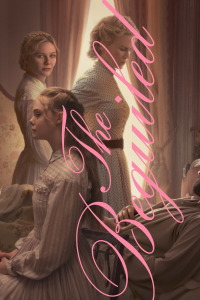
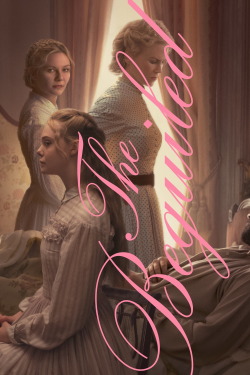
The Beguiled is the kind of film that I almost feel obliged to like for it's art house aspirations. And yes, It is atmospheric, it's subtle, and it is visually interesting. But I can't escape a script that feels oddly edited and under served.
In the general flow of the film we jump from one day to the next rather sporadically, with the days marked by scenes of liturgical and traditional focus (evening prayers, school time, meals, standing on the upstairs porch watching through the hand held binocular) and scenes of random interruptions of the status quo. The setting of the film is a boarding school house in the civil war era, where the interruptions to the status quo essentially revolve around a decision to take in a wounded enemy soldier.
Where the film turns into a question of lost potential is in the gaps between the "days". First, it is not difficult to see the potential in Coppola's interpretation of an older Eastwood film and the original source material (a novel by Thomas Cullinan). And it is worth it to note that upfront:
Potential #1- A female director is able to bring some female perspective to a story that in Eastwood's interpretation revolved more around the male "threat" that enters the boarding school. Coppola offers us a picture of the different women whom are each drawn towards the male figure (played by Collin Farrell) for different reasons.
Potential #2- Given the setting of the civil war and the location of the deep south, Coppola juggles a discussion of slavery by making the interesting choice to take the slaves out of the picture. Some were upset by this choice, but I think there is intrigue to be found here with the way in which slavery becomes a question of the female characters themselves in the context of the boarding school. Even the intentional shots of the gate at the entrance to the boarding school makes the school look and feel and seem like a prison. In this way, the whole slavery idea is framed around a more feminist slant.
Potential #3- The theme of desire is given prevalence in this film, and the way this desire is juxtaposed between the more liturgical elements and the "distractions of the world" that the interruption comes to symbolize opens a door to an interesting discussion of the way that the destructive potential of desire and distraction can slowly creep into our lives when we are not aware.
These are potentials that I think the film ultimately squanders. First, the film is too caught up in being artsy to give attention to weaving this potential into a good story. It is too long, for one. What it does in a feature length it could have done in half the time, leaving room and space to fill in the gaps (between days) with back story on the women, and giving us more of the end result. As it is, whereas the book was interested in the stories of the women themselves, giving us context for why each of them struggle with desire based on their own context and experience of the past, Coppola's film only suggests that this story exists. But we are given little information on who these women actually are, only their differing responses to the distraction that comes into their lives.
Much of the film relies on the tension of the question, who is Farrell's character and is he a threat? The movie plays around with this, but unlike the trailers, it doesn't really go anywhere with it. It is too interested in bringing our attention back to the women, which holds potential, but then it loses Farrell's character along the way, and his character is the one through which Coppola is shedding light on the women themselves. So she works against the potential in this way.
SPOLER ALERT.
One of the biggest areas of lost potential is undoubtedly the ending. Given that the film squanders opportunity to take the story further by dragging out the day to day juxtaposition, it is the ending that drops the biggest ball. The tension of Collin Farrell's character comes to an abrupt end, as does the conflict. And all of the promise that Coppola has set us up to experience- the slow corrosion of the relationship between these women- fades with it. We never get to truly see the most compelling part take root, which is seeing the women slowly turn on each other. This is what was intriguing about Coppola's approach to guiding our attention away from the male figure and towards the women. But the only thing we get are random sequences and random actions where certain things simply happen without stopping to consider what these happenings can tell us about the relationship between the women.
It's too bad that this film didn't work in the end. A strong cast, lots of potential, and some compelling questions. But the editing is just poorly executed, the film is too long, and the tension is never really executed. And on a personal front, it is confusing to me why critics seem to be in love with this film while (some) continue to pile on the perceived failure of another art house film that I think ends up far more realized -The Book of Henry. If you are looking for a good indie film, that one is the better bet in my opinion.
This review of The Beguiled (2017) was written by Selena B on 12 Jul 2017.
The Beguiled has generally received positive reviews.
Was this review helpful?