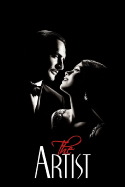
Review of The Artist (2011) by Johnnyhollywood — 08 Mar 2012
Is silence golden?
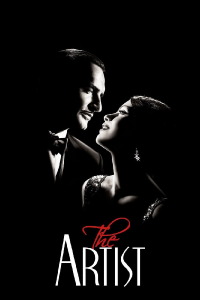
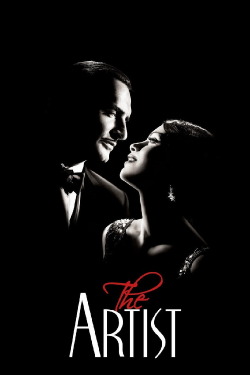
It was one man's singular vision: to create a film in 2012 that reflects the look, style and charm evoked in the cinematic world of 1927. If successful, it would surely be the toast of the Academy. If not, it would be doomed to work the art-house circuit, garnering an apostolic fan base but only seeing the light of day for, ironically, an assortment of midnight screenings. Purists take note: director Michel Hazanavicius does take some liberties with the final product, but for a film that hardly utters a single word, the language of cinema oozes out of every scene with an all-ages charm that deserves every accolade it receives.
George Valentin (Jean Dujardin) is the world's biggest silent movie star. But with the groundbreaking introduction of 'talkies', it becomes increasingly apparent that this is a business for the young, and that he must change with the times to remain relevant. This is easier said than done for the vain Valentin, who has only ever known one way to make art, and he isn't about to give it up just because some Hollywood big-wig says so. The face of this new generation is Peppy Miller (Berenice Bejo), a former co-star of Valentin's who seems to keep showing up in his collapsing personal life.
Having to work without the help of the spoken word, Hazanavicius finds a myriad of other ways to tell his story. The occasional attention paid in Year Twelve English finally comes in handy, as the well-trained eye can spot visual motifs all over the place. The titles of movie posters in the background of most shots cleverly reflect and foreshadow the story, while a handful of Hamlet-esque films-within-films add depth and personality to the proceedings. Appropriately, though, music is the organic piece of storytelling, deftly enthralling, calming and bolstering audience sympathies whenever necessary, including a suspenseful climax made all the more engaging by some directorial slight-of-hand, in which the film takes advantage of its lack of diegetic sound to exploit the audience's perception of reality.
And yet, on top of its excellent appropriation of outdated techniques, The Artist has the benefit of being made in an era that does not restrict one's imagination. Filmmaking methods considered too sophisticated for their contextual time are used to great effect when the film demands a sudden change of pace, such as during moments of reflection or dream sequences. In a wholly recreated film, these scenes would look as out of place as a drum solo at a Ramones concert, but their inclusion brings a uniqueness and originality that was certainly not expected.
Overall, though, this is not a movie about technicalities. Nor is it a comedy, as so many people have hastened to classify it. It's a movie about heart, trying to tell of the rise and fall of a conflicted man struggling to find his place in a burgeoning new world. And where the medium of delivery might be unorthodox, the theme is certainly universal. Dujardin earns his Best Actor award with the creation of a painfully strong headed, yet sympathetic character, while the (quite literally) unspoken chemistry between our lead and Bejo is enough to make most modern actors extremely jealous.
The film might start off as a gimmick of sorts, introducing a sceptical audience to the marvels of ancient movie-making. Over time, the slow cuts, sped-up pacing and deliberate overacting do not so much 'wear off' as they do 'graciously step aside', allowing the plot and its drivers to take centre focus.
In a world where all films are immediately categorised as either 'indie' or 'blockbuster' well before their release, those who disliked The Artist might argue that it was the film's blatant reverence for the past that won it the top prize. Of course, this argument can only exist in its own vacuum, as a love of all things old seemed to be the theme of this year's Oscars, employed by many quality nominees, including personal favourite Hugo. But where Scorsese has crafted a tribute to one man's greatness carefully disguised as a children's film, The Artist is more of a character piece, with a theme so recognisable it could have been just as engaging if set today.
*There's nothing I love more than a bit of feedback, good or bad. So drop me a line on [email protected] and let me know what you thought of my review. If you're looking for a writer for your movie website or other publication, I'd also love to hear from you.
This review of The Artist (2011) was written by Johnnyhollywood on 08 Mar 2012.
The Artist has generally received very positive reviews.
Was this review helpful?