Review of The American President (1995) by Dan W — 31 Jul 2012
Directed by Rob Reiner, and featuring an all-star cast, The American President resembles some of the best of older American films in its simplicity of story. On the down side, it also presents some of the less desirable elements of more recent American film in its choice of language and moral standards.
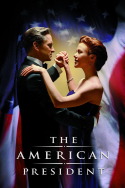
Michael Douglas plays Andrew Shepherd, the President. A widower for all of his original term, he finds unexpected romance right in Sydney Ellen Wade, an attractive attorney played by Annette Bening. As is often the case, there are a few complications to this relationship; the foremost of which being that she happens to be lead council for an environmental group lobbying strongly for changes in a bill about to go before Congress. Also prominent is the timing, as Shepherd is about to make a bid for re-election.
The attendant issues of conflict of interest, questionable spheres of influence and personal freedoms versus professional responsibilities comprise much of the plot.
Equally pertinent is the posed nature of the presidency itself. In this day of electronic media and heightened public awareness, how much of a personal life can a public figure realistically expect to have? Is the President's choice of companionship a matter of public scrutiny? Can any life be so minutely opened to the prying eye twenty-four hours a day without resentment and disappointment?
To its enjoyment, the film handles the issues lightly, while dishing out generous amounts of romantic humor, likeable characters and revealing scenarios. Whether it is accurate or not in its depiction of life at the White House, few of us will probably ever know, but it is certainly in line with most of our conceptions of such an existence.
Forget Hollywood celebrities. Washington is the home of America's true royalty. In an American version of Charles and Diana, President Shepherd woos commoner Sydney; drawing her into the ultra-powerful and socially elegant surroundings of the White House. Designer Lilly Kilvert has done a stupendous job of detailing the offices and residences of this historic symbol.
Taking advantage of our television familiarity with certain views of the estate, the film soon leaves you with little reason to doubt that we are actually there; watching all of the inner workings as they unfold.
Much of the movie's charm comes from Sydney's conflict between her realistic awareness of the situation's potential for catastrophe and her all-a-flutter reaction to the notion of being dated by the occupant of the Oval office. Bening exudes shear giddiness in such scenes.
Michael Douglas is equally amusing in his contrast of a Chief executive fluctuating between his decisive head of state handling and his nervous anticipations of getting ready for a first date.
The film excels at displaying the monumental task of running the Union; of dealing with the never ending stream of issues and requests that come across the President's desk. Not quite so successful is the story's efforts to show the President lost in his romance.
His refusal to engage in character assassination against slimy presidential challenger Bob Rumpson (Richard Dreyfus) is believable taken on his argument of principle. His insistence on interrupting affairs of state to perform sentimental little errands is not.
The story is bolstered by a strong supporting cast including Martin Sheen as the President's chief of staff, and Michael J. Fox as his overly protective speech writer.
Despite the rather generic PG-13 rating, The American President does contain some rather strong language. It's not abundant, but does come up in some heated arguments near the end. The more subtle issue is that of moral example.
Within the story, the President's behavior with his new love is called into question by the public. The story seeks our sympathy in his decision to have Sydney spend the night by stressing their developing feelings for one another, and by focusing on the unfair slurs of candidate Rumpson. Yet the fact is that we would hardly condone such a relationship in our community, and certainly could not support anyone acting in such a highly visible position of leadership.
The fact that the film resolves the conflict, not by changing his habits, but by having him aggressively defend his choices is disturbing. Granted, the issue of who is best qualified for the job is more central to the storyline, but to raise and then dismiss the issue of the President as role model is a quietly influential position that would not be lost on developing youth.
This review of The American President (1995) was written by Dan W on 31 Jul 2012.
The American President has generally received positive reviews.
Was this review helpful?