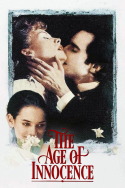
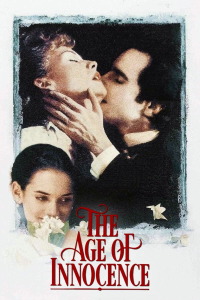
Review of The Age of Innocence (1993) by Laure S — 20 May 2008
Martin Scorsese's masterwork and like his best films (Last Temptation of Christ, Mean Streets, Kundun) the work which engages the masculine perspective in relation to it's sexual or spiritual ideal.
In this work it is a theme engaged ever so elegantly. Scorsese keeps Wharton's astute social observations intact(aided by a great narration track from Joanne Woodward) and in his masterfully fluid tracking shots, iris shots and sutibly placed edits(Themla Scoolmaker at her best) shows that way a society is percieved and the reality of it's existance in the way the central figure percieves himself and his ideal self as opposed to the way things really are.
His Newland Archer(some of Daniel Day Lewis most subtle work) like Charlie in Mean Streets lives a cirtain way but percieves himself to be something else and Scorsese charts his the universe in relation to this divide.
Customs and the social signs and interactions that accompy them are given as much focus as the central affair of the narrative. With probing this terren with devastating accuracy Scorsese has indeed made a melodrama of power in the lines of the best of Orphuls.
Scorsese ever the film scholar makes gorgeous filmic references ranging from Visconti's The Leopard to Welles's Magnificent Ambersons, most notably in the opera ball sequence and the numerious party/diinner gatherings.
As well like those films this film is a work of an artist with mortalty as his subject and with that Scorsese has made his most humanistic work. Here he regards memory and the sad humbling passage of time itself with a final image of devastating power ending with a man confronted with the truth of what was and now is.
This review of The Age of Innocence (1993) was written by Laure S on 20 May 2008.
The Age of Innocence has generally received very positive reviews.
Was this review helpful?