Review of Teenage Mutant Ninja Turtles (2014) by Kaitlin K — 03 Nov 2015
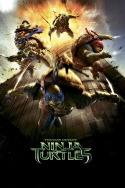
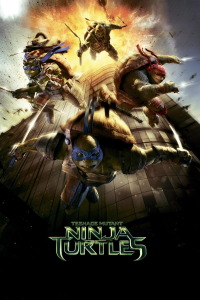
In every variation of the Teenage Mutant Ninja Turtles, there remains an underlying theme, that our strength does not come from ourselves, but from each other. Each of the turtles are different, yet seem to balance each other out. In every situation that the turtle brothers encounter, it is evident that there must be some form of teamwork to resolve the issue or prevent the danger that is soon to be done. This concept of togetherness and familial bond is especially clear in the most recent release of the film, the 2014 version of the story that has been around for just over thirty years.
The theme starts to show its importance fairly early in the film, when the four brothers are combating a crime group in New York City. Throughout the past few weeks at this point, the group has created nuisance all over the city, but have been stopped by the mutant ninja turtles. April O'Neil, a reporter played by Megan Fox, witnesses the event but fails to gather any evidence other than low quality photos on her cellphone. Later, after assessing all evidence she has acquired, April realizes that the group saving the city always leaves the same symbol behind, at every crime scene that they stop. The symbol is written in kanji, a system of ancient Japanese writing that uses Chinese characters, and it means 'family.' Right away, without a proper introduction to the heroes, we can already assume that family is at least of some importance to them, and express it everywhere, especially in areas of victory and success.
Later, the family of turtles is found in a situation in which they must figure out how to solve the issue of April O'Neil possessing photos of them on her cell phone. Immediately, the audience is presented with an oversized turtle with a red mask, Raphael, who uses a stern approach and commands April to surrender her cell phone. Suddenly, Leonardo jumps down from the sky and asserts his bold authoritative role in the family. This particular part of the scene presents significance because the brothers have been restricted to going above ground, and here they are, going even further beyond their father's commands, and revealing themselves to a human. He is literally "jumping down" to April's level, because he is stronger and almost "above" her, both literally and in a societal sense, perhaps. His jump from the sky makes him seem of higher form, readying the audience for a terrifying contact.
However, Leonardo decides to adopt an easier approach, imposing a kinder attitude than his jump seemed to give off. Then, the most young at heart and perhaps fan favorite ninja, Michelangelo, plays off his humorous and naïve side, taking off his mask to show that he's not too frightening after all, which causes April to faint. Lastly, upon April's regaining of consciousness, the audience meets the brainy yet charming Donatello. In this scene, it is clear that the confiscating of the cell phone and resolving of the conflict would not have been accomplished by a single turtle, and they all seemed to balance each other out. Without each other, they would've been nothing but a failed mission.
Towards the climax of the film, the four ninjas have each individually faced the villain, Shredder, and none have had a successful battle. At a spur of the moment, Michelangelo suggests that the group play a game of "buck buck," a game similar to the concept of leapfrog, but with the intention of knocking the bucket at the end of the line. Leonardo sees the logic in the concept of knocking Shredder out through the game, which requires all four ninjas to focus and contribute in order to have its effectiveness. Once again in this scene, Leonardo stumbles out first, like he did when he encountered April O'Neil. Shredder is also "below" the turtles, yet they haven't been able to understand that yet. His sword crashes into the metal body of the Shredder, and he crouches down for Michelangelo to complete the next step. Michelangelo flips through the air and his foot lands on Shredder's face, breaking bits of metal off. He too crouches on the ground, as Donatello screams through the air as he flips, hitting Shredder with his sword and landing in front of both Leonardo and Michelangelo. Lastly, Raphael jumps over all three turtles, and when his foot lands on Donatello, Donatello jumps up to send Raphael higher into the air. This shows how each of the brothers raise each other to higher heights and help each other to achieve more together. Raphael kicks Shredder across the rooftop and sends him off the building. Through their combined efforts, the team successfully eliminates the enemy, at least temporarily. If one of the ninjas had not put its best effort forward, or one had been absent during the fight, the attempt would have failed and the enemy would remain standing. Again, the value of teamwork and family is made clear.
Finally, at the end of the film, the turtles are together again in an effort to save their father with the remaining mutagen. All involved are frightened that it won't work and that it is too late to save Splinter's life. This scene in the movie is slightly different from others because all characters are required to assist in the effort in obtaining the mutagen. April O'Neil and her friend must face many obstacles without the ninjas to help them, and if they had not obtained the mutagen or had not been ready in time, the entire effort to defeat Shredder and save the city would have been useless. After injecting Splinter with the mutagen, the turtles expect instant results and grow impatient within seconds of the mutagen not bringing Splinter instantly to life. The music in the scene adds suspense to the scene, as Splinter struggles to catch his breath and asks for Michelangelo to come closer. He whispers something into Michelangelo's ear, and as Michelangelo backs away, the three remaining brothers repeatedly ask what Splinter said, in which he tells them that Splinter asks for Michelangelo to take his knee off of his chest. After pronounced sighs of relief, the brothers all start to take blame for the course of events, and Splinter selflessly blames himself. This shows that though the family may fall, they fall together, and similarly, when they rise, they rise together.
In conclusion, the very concept of togetherness and combined efforts is essentially what drives the ninjas and April O'Neil to succeed in the grand scheme of things. Even at the conclusion of the movie, Splinter shares with his sons that he was not yet ready to allow them to leave but he knew that they were ready to enter the real world. In telling the boys that they have strength together, they are able to see how much they have accomplished through each other. Family is essentially everything and the base of this film and without family as the foundation for the brothers, no evil would be fought.
This film is enjoyable to people of all ages: adults, because they grew up with the four loved brothers in comic books and animations, and children, because the four brothers become admired as the superheroes who defeat "the bad guy." Again, all ages can learn something from this film as well; we cannot only look into ourselves to understand how we can improve, but rather accept help and insight from others whom contribute to our development. It's okay to accept help from others, and in turn, we must continue to help others in the way that they help us.
This review of Teenage Mutant Ninja Turtles (2014) was written by Kaitlin K on 03 Nov 2015.
Teenage Mutant Ninja Turtles has generally received mixed reviews.
Was this review helpful?