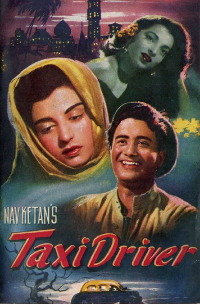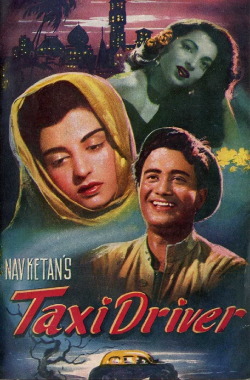
Review of Taxi Driver (1954) by Cameron H — 25 Feb 2016
Travis Bickle (Robert De Niro) lives in a world, New York City, that needs to be washed away, according to him. He travels through any street of any burrough, and witnesses the scum of the Earth committing the most dastardly actions ever possible by man. Bickle has had enough of it. He is ready to take action himself, and fight the scum. Based on this description, what would you think Taxi Driver plays out like: an underground detective drama, a morally challenging action flick? Not even close. Martin Scorsese may do his best to depict this world with the same blurry, disoriented vision that Bickle must see New York City, but don't be fooled. Scorsese knows what story is really being told. The message is that people like Bickle are so dangerously sociopathic that they are willing to take actions based solely on their short-sighted perspective of the world. Our central character is despicable, even pathetic, but De Niro somehow plays Bickle with such discomforting charm. My attachment towards the character felt plagued by his extremely unstable nature, to the very last shot of him sharply turning his eyes to his rear view mirror. I could never quite predict what De Niro would do next, not even in scenes where I had a vague idea of what would happen.
As an avid movie watcher, there's always the possibility that my personal opinion of the character is skewing what the movie was trying to tell. I have yet to justify my claim that Scorsese was depicting Bickle as a dangerous man. There were other characters, in their own scenes. We had campaign managers Betsy (Cybill Shepherd) and Tom (Albert Brooks), a 12-year-old prostitute Iris (Jodie Foster), and her pimp Sport (Harvey Keitel). Everyone was so young. Anyway, it may not be much of a shock to recognize Betsy and Tom as stable, rational people who were comfortable in their environments, despite what Travis Bickle firmly believed and told Betsy on one of their dates. What was more shocking was a scene between Iris and Sport, after Travis ate breakfast with Iris and encouraged Iris to break out of the prostitution ring and return to her parents. Iris tells Sport that she has thought of leaving the business. Sport's response? A warm embrace, followed by a slow dance to the smooth jazz that is the theme to Taxi Driver. That's right, Bickle was wrong about her too. It's too late for him to recognize that, however, because by the climax of the movie, Iris doesn't have a choice but to leave. Subconsciously, Bickle does not give a damn about how other people actually feel. He is a purely selfish man who believes that everyone should be grateful for his deeds, up to and including his most psychotic ones. And as the camera cascades above the climactic scene, past the bullet-riddled bodies and blood-stained walls of the whore house, the scariest horror is that Travis Bickle is seen as a hero in his world. He is still out there. Taxi Driver is such a unique experience, and this was only the beginning for most of the people involved in the production. Absolutely flawless.
This review of Taxi Driver (1954) was written by Cameron H on 25 Feb 2016.
Taxi Driver has generally received positive reviews.
Was this review helpful?