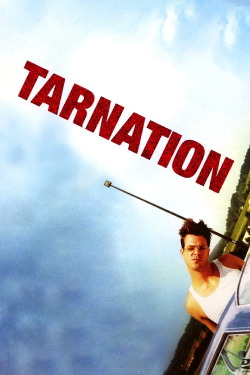
Review of Tarnation (2003) by Slim P — 16 Apr 2005
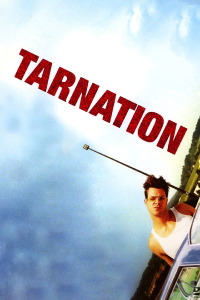
[b]Tarnation [/b]has been hailed as the cheapo indie movie of the year: reportedly made for two hundred and eighteen dollars and some cents, director/star Jonathan Caouette purportedly whipped the movie together using Apple's iMovie, creating a frenetic patchwork of video clips, phone messages, photos and dizzying visual effects. It's a story of his pretty darn whacked family: we're introduced to his little-girl-lost mother Renee, whose sanity has been torn apart by electroshock therapy and a lithium overdose; his alternately benign and yet emotionally oblivious grandparents Rosemary and Adolph; and finally himself, abused child, flaming homosexual, and... from the looks of it, strangely narcissistic individual. (I'll explain later.) Whatever the case, Caouette's documentary took the indie festivals by storm, and was on occasion hailed as the next big revolution in movies: any aspiring schmoe with an Apple, a couple hundred dollars, and several hundred hours of footage can put together a movie, and get it sold for big bucks and to big audiences on the festival circuit! Whoo hoo!
Well, um, not so much.
Caouette's story is certainly tragic, and it's hard not to be drawn into the melancholic beauty that shrouds his mother throughout the film, even in her older age when she's so long been steeped in psychosis that all that's left of her is an aged, flabby body but surprisingly resilient cheekbones. The black and white photos of a young, lovely Renee that Caouette scatters liberally through the movie speak of hope, and play out in stark contrast to the scenes in which Renee's mind wanders: she blithers on about having Elizabeth Taylor's jewels, she refuses to talk about her problems when asked point-blank, she fishes out a life for herself the reality of which no one can know for sure... it's all very, very sad. The effect this has on Caouette, who was shuttled from foster home to foster home, and finally adopted by his grandparents, is hinted at: at one point during his 'acting-out' phase, he attempts suicide almost every week, the ubiquitous subtitles inform us. He started hanging out at gay clubs as a tween, participated in lock-ins and various other underground activities. The ghosts that haunt his grandparents Caouette just about hints at, when he shows footage of his grandmother post-stroke, or Adolph teetering about refusing to accede to Renee's claim that he used to lock her in closets. The audience is left wondering at every turn just who was right--just what went wrong--and failing that, a deeper exploration of the family dynamic that apparently underpins Caouette's entire life.
But this is exactly the problem that lies at the heart of Caouette's project. The hints he drops are tantalising, but when it becomes clearer that he has no answers for himself, much less his audience, it's hard not to recognise him for what he is--an amateur. Yes, he certainly has scenes of disturbing footage at hand (including a protracted, numbly horrifying scene starring Renee and a toy pumpkin), but a director he is not. He cheats and tells much of the story through photographs and subtitles; aside from scarily pitch-perfect acting performances from an androgynous 11-year-old version of himself, which vitally show up the broken, talented little boy he was, the rest is filled with sometimes random, sometimes stock footage pieced together, shot after shot of just him staring vacantly, posing, screaming at the camera. He has few truly affecting or revealing scenes actually captured on film. That the movie wanders into offbeat, self-indulgent scenes starring his (seriously gorgeous!) New York City boyfriend David and snow angels, which might have worked had he framed it better, show that he doesn't have a really firm grip on his narrative arc. The movie plays like an acid trip, which is fine because that was probably the intention. But twenty too many split-screen effects, a hundred too many bizarre shots of him pulsing with light or merged and blended into a new freaky face means you're too busy digesting the effect. All poignancy is lost.
The ending falls disappointingly flat as well. Where what had come before was either candid or done interview-style, Caouette at the end tries to interview himself. He sets up a camera in the john and stages a tearful confession for the benefit of the audience. That's right: stages. Even if he claims he had captured the final few scenes before deciding to make a movie out of it all, it's telling that his choice about how to end his film is as annoyingly film-studentish pretentious as you can get. With the teary confessional ringing hollow, Caouette appears to be mugging for the camera, which stands out in gaping relief against a scene of him as a young boy throwing himself fervently into the role of an abused housewife turned murderer. (Now [i]that [/i]was an unsettling but nervily brilliant performance.) When the movie ends, there's no doubt that he's carefully, manipulatively scripted it to recall a story his grandfather earlier tells about the 'angel mark' on human faces. It's cheap and not entirely convincing.
You can tell from watching the movie that Caouette was trying to paint his mother as a tragic heroine, brought down by a fate she'd never wanted or ever came to grips with. Well, maybe he would have succeeded if he hadn't been too busy setting himself up as a tragic hero too...
This review of Tarnation (2003) was written by Slim P on 16 Apr 2005.
Tarnation has generally received very positive reviews.
Was this review helpful?