Review of Sullivan's Travels (1941) by Scott C — 09 Apr 2013
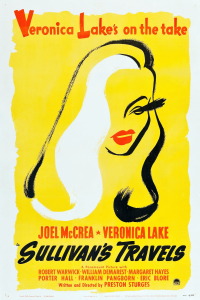
A wealthy hollywood director gets more than he bargained for when he goes out looking for "trouble" so as to better identify with the common man (and make a better film dramatizing their plight).
The director's name is Sullivan (Joel McCrea), and he is more known for goofy slapstick than dramatic human interest. He believes himself to be a noble pursuer of truth and justice, but as his butler Burrows points out, dressing up as a bum and hoboing around is something "only the morbid rich would find glamorous".
At first, the studio is intent on following him around (in a giant bus, no less) to document this adventure, but he quickly loses them after making a deal to meet up with them later. Not long after, he's taken in by a girl (Veronica Lake) who buys him a ham-and-egg breakfast as she's on her way east, back home.
Sullivan is attracted to her and wants to make a movie with her, only he's still trying to maintain his incognito status, so as a compromise, he goes home and steals his own car so as to give her a ride to whereever she wants to go ("Chicago", she says).
After she discovers his ruse, the girl decides to go along with him on his adventure ("How can I be alone if you're with me?" he asks, but to no avail), and the two delve right into the seedy underbelly of America's misfortunes.
Riding the rails, sleeping in flophouses, looking for handouts, as if some great and noble purpose could be distilled from abject misery. But as with other martyrs, that nobility is never pure, as they could escape their condition at anytime they so choose, he's never really down and out, he still has his millions waiting for him at home, and so the deception is never fully realized as he knows who he is.
Ah, but after he goes back to being Sullivan, and he's clunked over the head and robbed by a hobo and then thrown onto a freight train, well only then does he come to realize the nature of being lowly and without friends.
Sullivan comes to realize the irony of socially conscious films is that they do nothing for the people they purport to defend, that watching a film doesn't change anyone's plight. The best a film can hope to do for the lowest rungs of our society is take away the burden of life for a little while, take a person somewhere they've never been before, let them laugh and enjoy themselves, even if it's just for a little while.
Throwing their poverty back up in their faces doesn't help them, not even a little bit.
This review of Sullivan's Travels (1941) was written by Scott C on 09 Apr 2013.
Sullivan's Travels has generally received very positive reviews.
Was this review helpful?