Review of Straw Dogs (1971) by John F — 09 Mar 2009
They say that is usual in men to come to a point in their lives in which the either snap, or dramatically change their focuses in life or just walk away from familiar surroundings. Therapists speak of a journey to some elusive land that pulls men even though there are no maps to ensure a safe travel. Those in the know thus make reference to the great myths that involve trips into the unknown: Jason and his Argonauts going after some golden fleece, Ulysses spending 10 years on a trip that he would normally make in few days, or the multitude of knights blazing just as many trails in order to get to the exact place in the dessert in which they would be able to get hold of the Holy Grail. All of these legends speak of a deeply rooted longing in mostly but not exclusively male psychology that impels men to all of a sudden break free and just walk away.
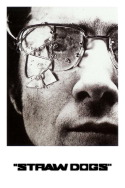
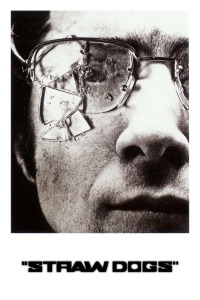
With this question in mind I went back to Sam Peckinpahâ??s â??Straw Dogs.â?? A young Dustin Hoffman plays a researcher who is breaking ground in the field of Math and thus needs some time away to finish his research. He rents a cottage in England and goes with his wife (Susan George) on a sabbatical. The cottage belongs to his wifeâ??s family and itâ??s located in the little town his wife grew up in. Once there, the young professor becomes a foreigner in a rather hostile environment. The men in the village think of him as a weakling while openly lust after his wife, specially her old flame from her teen years. The increasingly escalating tension boils up to an awful mix of rape, violence and murder that provide the context for this young professor to affirm himself as a male. Following a line similar to William Goldingâ??s â??The Lord of the Fliesâ?? and R. Littleâ??s â??The Kindly Ones,â?? Sam Peckinpah unearth the beast that lies dormant inside of the most civilized and law abiding souls. Whenever it comes to proves oneâ??s mettle, violence seems to present itself as the most appealing route to follow.
Hoffmanâ??s character descends from a pedestal of snobbery on which he has perched his sense of worth to test himself as just another man in a backward village. However, at the end, as he drove away from a destroyed house leaving behind a wife he has neglected all the time, he sports a smile that tells of a newly discovered freedom, as if he has just gotten hold of the Holy Grail, or the golden fleece, or Ulyssesâ??s Ithaca. Yet, in Peckinpah the recovered male self is not marked by either a sense of getting back home or finding the way home. Ironically, the final smile of this professor is punctuated by his contradictory words: â??I donâ??t know my way home.â??
This review of Straw Dogs (1971) was written by John F on 09 Mar 2009.
Straw Dogs has generally received positive reviews.
Was this review helpful?