Review of Strangers on a Train (1951) by Matte B — 18 Mar 2009
It's Hitchcock's simplistic plot that makes Strangers on a Train work so well. What starts off as a mere coincidence on a train ride soon turns into a deceiving web of double-crossing as a famous tennis player unknowingly agrees to a psychotic's plan to murder his current wife.
Guy Haines (the tennis player) was trying his best to get out of the same room of the twisted Bruno Anthony and ends up finding his nasty wife strangled at a carnival fair. Sure, Guy wanted her dead anyways since she decided to throw out any and all ideas of getting divorced once she discovered he was making buckets of money, but now he knows that it's his turn to hold his end of the deal. This bargain means that he is now going to have to murder Bruno's father. Easier said than done. What Guy thought was a playful game soon turns deadly as Bruno begins to hound him throughout his everyday life to the point where he may harm someone very close to him if Guy doesn't pull through.
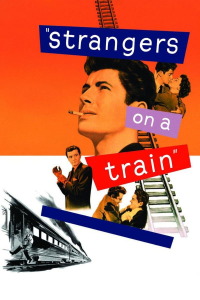
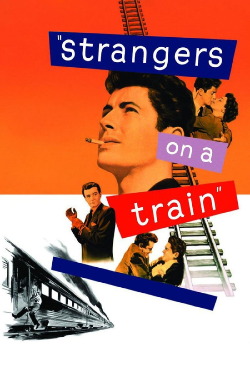
As I said earlier, this works because of the simplistic plot. Robert Walker does an amazing job portraying the dastardly Bruno, who is perhaps one of the creepiest villains in cinema. What makes Bruno so deadly is the fact that at his core he is a very moral character, no matter how delusional he may be. Hitchcock litters the film with symbolism for the pair (Bruno ordering double shots, the opening shots of the feet walking through the train station, etc.). You can even spot this on the movie poster since they show two railroad tracks on opposite sides of the poster that seem to be joining towards the top. This isn't my favorite Hitchcock, but I think Bruno is the best villain to appear in his films since Uncle Charlie from Shadow of a Doubt. See it before they remake it. Again.
This review of Strangers on a Train (1951) was written by Matte B on 18 Mar 2009.
Strangers on a Train has generally received very positive reviews.
Was this review helpful?