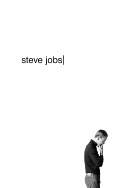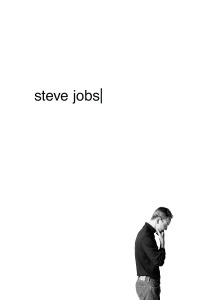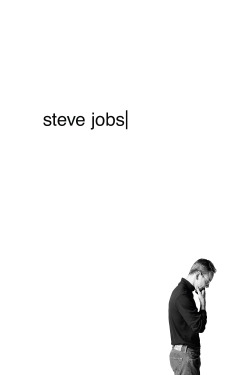
Review of Steve Jobs (2015) by Justin J — 28 Feb 2016
First, let's look at a relevant passage from Nietzsche's "Menschliches, Allzumenschliches":
"With all great deceivers there is a noteworthy occurrence to which they owe their power. In the actual act of deception, with all its preparations, its enthralling in voice, expression and gesture, in the midst of the scenery designed to give it effect, they are overcome by belief in themselves: it is this which then speaks so miraculously and compellingly to those who surround them. The founders of religions are distinguished from these great deceivers by the fact that they never emerge from this state of self-deception: or very rarely they experience for once that moment of clarity when doubt overcomes them; usually, however, they comfort themselves by ascribing these moments of clarity to the evil antagonist. Self-deception has to exist if a grand effect is to be produced. For men believe in the truth of that which is plainly strongly believed.".
The central conceit of Aaron Sorkin's screenplay for "Steve Jobs", as indeed it was for the Walter Isaacson biography upon which it was based, is that the same traits that made Jobs a difficult asshole to work with in real life were also responsible for his "genius", if you will. But what was the true form or nature of that genius? The conventional wisdom seems to be that Jobs was some sort of revolutionary technological genius of historic import, somewhere on the spectrum between Benjamin Franklin and Albert Einstein (both of whom, not coincidentally, were also the subjects of Isaacson biographies).
I would contend, pace Isaacson and Sorkin, that, examined carefully on their merits, Jobs' technological contributions to humanity were, if not virtually nil, then certainly wildly overblown. After all, as even this Jobs strokefest directed by Danny Boyle concedes, Jobs did none of the work to build any of the Apple computers-that was all Steve Wozniak. Nor did Jobs program any of the operating systems, nor did he ever really invent anything that could be described as any sort of sophisticated computer technology. As a thorough review of the US Patent database will show, all of the ~150 or so patents that have Jobs' name attached are for items whose function is superficial and aesthetic-a rounded housing for a monitor, for example, or the shape of keys on a keyboard, or the shape of a phone, and so on.
No, the true genius of Steve Jobs was in marketing, and nowhere is that genius more manifest than in the existence of this film. Marketing himself was central to successfully marketing Apple; and it was his marketing of Apple that led it to becoming the most profitable company in modern history. This profitability has flown in the face of rational logic and reasoning; but of course, marketing is a vocation which is predicated on convincing consumers to make decisions which are not optimal, nor necessarily in their self-interest. Jobs' realization was that one didn't need to appeal to a broad swath of consumers to be successful, so long as one could instill a sufficient degree of brand loyalty and (some would say) cult-like devotion within a spirited minority. This is all of course borne out by the facts: the vast majority of smart-phones in the world use Android, not iOS, running on hardware that is not Apple's. Likewise, Apple's share of the personal computing market, even years after its boom period under Jobs' second tenure, remains lower than Lenovo, Toshiba, HP, Dell, and Acer, among others. If "it just works" as the slogan goes, it certainly hasn't caught on with the 90% of consumers who use Windows machines.
So whither this success? Simple: Jobs convinced a dedicated consumer minority that Apple's products weren't just functional; they were also fashion accessories and status symbols. They worked well, to be sure, but more importantly, they looked cool. But according to Sorkin's script, it was more than that. In what is supposed to be a powerful scene that epitomizes Jobs' indispensable genius, we see him issue a rejoinder to Wozniak, who just pointed out that he and others are actually the ones who made the computers, or instruments (they were standing in an orchestra pit); "I conduct the orchestra!" exclaims Jobs. Fair enough. But who wrote the music? Who built the instruments? And if Jobs is, as he insisted, the "conductor", then why do Sorkin, Isaacson, and the world act as though he were Beethoven rather than Von Karajan? Answer: they think he's Beethoven because Jobs incessantly marketed himself as such.
Proof of his success abounds in Isaacson's biography, where he seems to swallow, hook line and sinker, the notion that Steve Jobs was an "artist". But was he really? Surely Jobs conceived of Apple's marketing strategies, but from an aesthetic standpoint, Apple clearly owes its distinctive "look" to Jonny Ive. But Jobs presented himself as a stereotypically tortured artist, and people bought into it. Isaacson and others seem to think that because Jobs was obsessive-compulsive, a perfectionist, had a Buddhist wedding, listened to Bob Dylan, and ate vegan, that he was some sort of embodiment of 60s counter-culture artistry. Not to be too frank, but if Jobs was a Buddhist, then I'm Hellen Keller. And if Jobs ever was truly a "child of the 60s", then surely every time he opened his mouth was Altamont.
Jobs' true historical analogue isn't Ben Franklin nor Thomas Edison. It's Don Draper, the central character on "Mad Men". Jobs' hippie pose is about as convincing as Draper's transcendental meditation at a New Age retreat in the "Mad Men" finale; and his ability to market Apple, and above all, himself, was as cynical and effective as McCann-Erickson's "Hilltop" advertisement for Coca-Cola that concludes that series. Our culture seems to have difficulty in accepting Jobs' true role as a (mostly) successful businessman whose true talent was in marketing; no one would ever claim that John D. Rockefeller was an artist. That Sorkin, Boyle, Isaacson, et. al. continue to do so is a testament to the power and efficacy of his self-promotion.
This review of Steve Jobs (2015) was written by Justin J on 28 Feb 2016.
Steve Jobs has generally received positive reviews.
Was this review helpful?