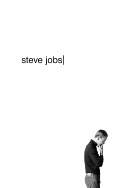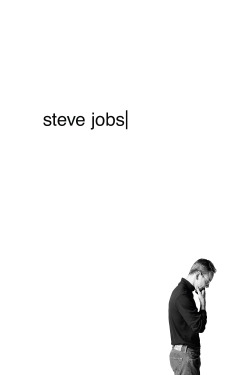
Review of Steve Jobs (2015) by Moviemastereddy — 02 Apr 2016
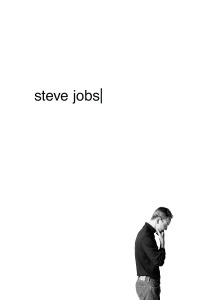
How do you get to the bottom of a character like Steve Jobs, a figure so towering and complex that he could arguably serve as the basis of a film as ambitious as Citizen Kane? If you’re a dramatist with the character insight and verbal dexterity of Aaron Sorkin, you make him the vortex of a swirling human hurricane, the puppet master who kept all around him on strings, the impresario of a circus dedicated to the creation and dramatic unveiling of technological wonders that changed the world. Racing in high gear from start to finish, Danny Boyle’s electric direction temperamentally complements Sorkin’s highly theatrical three-act study, which might one day be fascinating to experience in a staged setting. With its high-profile launches at the Telluride, New York and London film festivals, this Universal release is clearly positioned as one of the prestige titles of the fall season, and will be high priority viewing for discerning audiences around the world.
Conceptually, Sorkin’s work is structured like a play, as the three roughly forty-minute sections are set backstage as Jobs, who has been invested with equal parts hubris and focus by Michael Fassbender, prepares to launch three of his major products: The Macintosh in 1984, the NeXT “Cube” in 1988 and the iMac in 1998. The same subsidiary characters swirl in and out: Jobs’ feisty and invaluable marketing executive Joanna Hoffman (Kate Winslet), tech genius and early partner Steve Wozniak (Seth Rogen), Mac software designer Andy Herzfeld (Michael Stuhlbarg), Apple chief executive John Sculley (Jeff Daniels), perennially shunned ex-girlfriend Chrisann Brennan (Katherine Waterston) and the latter’s daughter with Jobs, Lisa (Makenzie Moss, then Perla Haney-Jardine). The actors are uniformly superb.
The dramatic, dynamic linking all these characters is that everyone wants something from the young Zeus of their world that they cannot get. The specifics differ in each case, but they all boil down to the desire for acknowledgment of their value from a difficult and withholding man, one famous for abusing his underlings, keeping them guessing about where they stand and rejecting their ideas only to later claim them as his own. As with Kirk Douglas’ ambitious movie producer in The Bad and the Beautiful in another era, the boss treats even those closest to him very badly but, in the end, his intimates and associates so desperately crave his approval that they keep coming back for more.
Following a disarming black-and-white clip of Arthur C. Clarke in 1974, accurately extolling a future in which computers will “enrich our society” and be as commonplace as telephones, Boyle and Sorkin jump ahead just ten years and plunge right into the mad moments before Jobs is to take the stage in Cupertino to introduce the Mac to a panting public, which has already had its appetite whetted by Ridley Scott’s brilliant 1984 Super Bowl commercial.
Jobs (who was just 29 at the time) was never anything other than cool and composed before the public, but conditions backstage could not be more chaotic: Jobs insists to his frazzled tech wizard Hertzfeld that the Mac itself must say “hello” to the crowd and demands that the exit signs be (illegally) turned off, Woz badgers him to publicly acknowledge the old Apple II team and Chrisann picks this moment to show up with little Lisa and give him hell for not acknowledging his daughter and providing for them.
As he has repeatedly shown in the past, Sorkin has a gift for writing the elevated gab of brainiacs, which has made him an ideal chronicler of such modern-age titans as Mark Zuckerberg and now Jobs. That said, The Social Network and Steve Jobs are radically different in their approaches to drama and character. But whereas David Fincher’s direction of the former provided an incisive, and often quite funny, sense of cool to the former, Boyle’s fast-heartbeat pacing and quasi-verite style provides the new film with a constant dramatic hum and you-are-there immediacy.
Propulsively fast, fleet and inquisitive, the film is at the same time somewhat less flashy than most of Boyle’s most famous and successful works, including Trainspotting, Slumdog Millionaire and 127 Hours. Due to its “backstage” setting and approximate real-time frame, Jobs can’t help but provoke memories of the recent Birdman, which breathtakingly covered continuous action with unprecedented fluidity. Boyle’s sophisticated but pragmatic visual approach to evoking a maelstrom of activity stands somewhere between that and more conventional cinema-verite, befitting, perhaps, the period in which it’s set.
The Jobs legend keeps on growing.
This review of Steve Jobs (2015) was written by Moviemastereddy on 02 Apr 2016.
Steve Jobs has generally received positive reviews.
Was this review helpful?