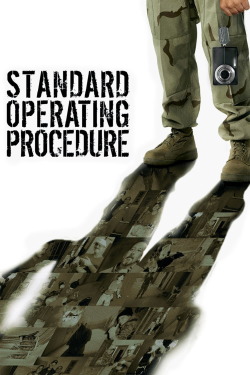
Review of Standard Operating Procedure (2008) by Peter L — 25 Apr 2008
GHOSTS OF IRAQ, VEILED THROUGH THE CAMERA.
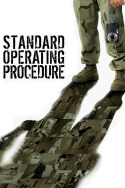
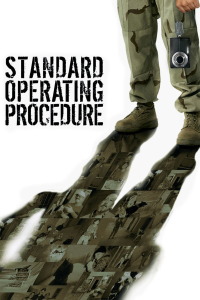
An Errol Morris documentary is always about perspective. You may know the story, but once itâ??s under another perspective, your entire world change. He was able to prove a murder false in The Thin Blue Line and shed light on the Vietnam War through Robert McNamara in The Fog of War. And in Standard Operating Procedure, Morris does it again. Abu Ghraib is a tragedy full of images that will forever stain the Iraq war; but under Morrisâ?? perspective, we discover that it is not simply human nature that caused this.
For the first half of the film, Standard Operating Procedure is more or less predictable and not shocking for anyone who watched CNN when the scandal broke. Morris brings in 4 of the military police that worked in the prison, and they begin to tell the story of who and what and how. Morris uses his flashy directorial and recreation skills (along with Danny Elfmanâ??s brilliant and haunting score) to push the setup.
But half way through, there seems to be a shift in which Morris questions, is this really a tragedy from the insider perspective? Thus the title, which refers to practical and approved use in the military, which many of the atrocious images are actually acceptable. Morris begins to shift perspective from this idea that these people were monsters of human nature to simply following military orders. He examines the nature of the photography and its implications of what we understand when we see the photo, and the many stories missing behind it. Simply put, he demystifies Abu Ghraib from a story of a few rotten apples to a complicated examination of the real and hidden players who have abandoned any notion of the idea of â??human rights,â?? and a world where not even the camera can give the truth.
And as his style continues to get in your face in a big way, the moral questions become grayer and grayer. Standard Operating Procedure is not the Abu Ghraib story of the media (Morris actually attacks the media portrayal of the scandal). But probably the best point of Morris is although he stylizes his documentary, its never his voice thatâ??s moving the story. His specialized camera, which allows for the interviewee to stares directly at the audience, lets them be the conductor of the story. We only hear his voice maybe five or six times during the interviews, and he never uses a voiceover like many other documentary filmmakers.
In the end, Standard Operating Procedure is an Errol Morris film. Everything that we think is easy, whether right or wrong, is obviously anything but.
This review of Standard Operating Procedure (2008) was written by Peter L on 25 Apr 2008.
Standard Operating Procedure has generally received positive reviews.
Was this review helpful?