Review of Spartacus (1960) by Filipeneto — 15 Nov 2020
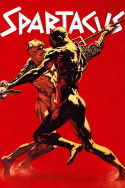
The Fifties and Sixties saw a proliferation of epic films made around the Bible or the Roman Empire. Based on a precise moment in the history of Rome, the Slave War, this is one of the best despite not having a comma of historical rigor.
The film focuses on the historical figure of Spartacus, a Thracian slave who begins by being a gladiator and who will become famous when he takes over the leadership of a huge group of slaves who, in the middle of the Italian peninsula, revolt and desperately fight for their own freedom and the right to abandon the empire's lands. The film creates around it a huge fictional plot and a somewhat sugary romance with another slave, and emphasizes the division of the Romans and political issues. Skillfully directed by Stanley Kubrick, it's one of the most palatable films in his filmography. The film follows the entire trajectory of the revolt until its bloody end.
One of the strongest points of the film is the extraordinary performance of the cast, led by Kirk Douglas in one of the roles that would give him immortal notoriety. He is perfect in the way he gave life to Spartacus, although perhaps Kubrick exaggerated the amount of pompous speeches and pouch phrases attributed to the character. Jean Simmons was excellent in the role of the slave he falls in love with and Laurence Olivier is impeccable in the role of Crassus, the famous Roman politician and consul responsible for ending the slave revolt. The film also features John Gavin, Charles Laughton, John Dall and Peter Ustinov in smaller roles, but where everyone did a job worthy of praise.
Technically, it is a film full of value and extremely positive grades. Let us start by mentioning the excellent cinematography, the impeccable filming work and the magnificent colors and light that accompany the entire work, which lasts about three hours. It is in fact three hours well spent, where we rarely feel we are seeing a scene that can be removed or shortened until we reach the last half hour... in fact, from that point on, Kubrick seems more concerned with creating a hermetically closed ending in spite of using the dramatic climax for a great and impactful ending. Thus, and as a result of this hesitation, the film drags on for unnecessary thirty minutes. All the sets and costumes were meticulously done and look incredible, although, like much of the script, they are more guided by the visual impact than by the historical rigor of the recreation. As in other epics of this time, many people are involved and the film was an imposing collective effort. The soundtrack, by Alex North, is effective and works quite well.
This review of Spartacus (1960) was written by Filipeneto on 15 Nov 2020.
Spartacus has generally received very positive reviews.
Was this review helpful?