Review of Spartacus (1960) by Me Zane H — 02 Sep 2009
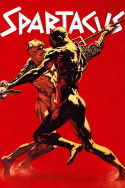
Actor & producer Kirk Douglas wanted to star as the protagonist in director William Wylerâ??s ancient world epic movie BEN-HUR: A TALE OF CHRIST. Wyler had other ideas. Basically, Wyler wanted Kirk to play the villainous Roman soldier Messala opposite the Charlton Heston hero. Kirk rarely played second fiddle to anyone unless it was Burt Lancaster. Consequently, since he had wanted to star in BEN-HUR, Kirk Douglas decided to not only star in SPARTACUS, but he also would produce it. SPARTACUS was an ancient world epic about a legendary slave who escaped captivity, organized a huge slave army and challenged the Roman Empire. Despite its distant past setting, SPARTACUS dealt with an issue that at the time of its release weighed heavily on the minds of America: race relations. The theme of SPARTACUS was the dignity and freedom that every individual deserves as his or her birthright. Good films span centuries because they mean something to us. The universal need that all men must be free lies at the heart of this blockbuster film. Indeed, SPARTACUS represented a liberal, Democratic sensibility.
Originally budgeted at $4-million, SPARTACUS proved to be a costly film with its budget reaching $12 million dollars. Today a medium budget movie runs about that price. When SPARTACUS came out everybody had something to say about its enormous budget. Ironically, MCA brought Universal-International Studio where Kirk was producing SPARTACUS for about the same price. SPARTACUS coined $30-million domestically at the box office and earned $60-million worldwide. This would be the biggest Kirk Douglas project. He turned heads in more ways that one. He allowed Hollywood Ten blacklisted screenwriter Dalton Trumbo to use his name on the credits for the first time. Trumbo had been blacklisted by the anti-Communists in Hollywood and Washington so that he could only pen scripts under a pseudonym. Mind you, he wound commanding lesser salaries as a result of this problem. Nevertheless, Douglas and Trumbo argued about the script because Douglasâ??a zealous Zionistâ??wanted SPARTACUS to reflect the travails of the Jewish people. Trumbo was more interested in how SPARTACUS reflected modern-day politics and the Cold War.
The version of SPARTACUS that you will watch is the restored version with the notorious oysters and snails scene between Sir Laurence Olivier and pop cult icon Tony Curtis. You will probably never be able to think about â??oysters and snailsâ?? in the same light after you see SPARTACUS. Religious groups complained about this scene with its conspicuously obvious language about bisexuality. British actor Peter Ustinov won the Best Supporting Actor Oscar for his role. The widescreen photography of Russell Metty received an Oscar, but Kubrick actually composed most of the shots while a disgruntled Metty sat nearby. SPARTACUS also won Best Costume Design Oscar and the Best Art Direction and Set Decoration Oscar. SPARTACUS received Oscar nominations for Best Editing and Best Music. Meanwhile, SPARTACUS won the Golden Globe for Best Motion Picture of 1960.
SPARTACUS is an epic adventure about a troublesome Thracian slave, Spartacus (Kirk Douglas), who is saved from sure death by slave trader Lentulus Batiatus (Peter Ustinov) looking for new candidates for and gladiatorial training camp. It does not take Spartacus long to make an enemy out of Marcellus (Charles McGraw) who runs the camp. Spartacus tries to befriend Draba, but he refuses to be his friend because he might have to kill him. Batiatus trains gladiators and sells them. This business regimen Spartacus hates slavery and leads a revolt against Rome. At first, Spartacus and his army try to leave Italy, but their plans are thwarted when two Roman armies try to trap them on the coastline. Spartacus decides to turn his army north and confront the latest dictator to rule Rome, Marcus Licinius Crassus (Laurence Olivier), a wealthy and devious soldier. Earlier, you saw Crassus bled Draba (Woody Strode) when the Ethiopian tried to scale the wall and attack him with a trident. Mind you, the weakest thing about SPARTACUS is the lack of hate between Spartacus and his mortal enemy Crassus. SPARTACUS is a rare, big-budgeted spear and sandal movie without religious references to Christ, though Spartacus is clearly a messianic hero. Kubrick does a great job of cross-cutting between the speeches given by Spartacus and Marcus Licinius Crassus to their public.
STARTACUS runs 197 minutes.
This review of Spartacus (1960) was written by Me Zane H on 02 Sep 2009.
Spartacus has generally received very positive reviews.
Was this review helpful?