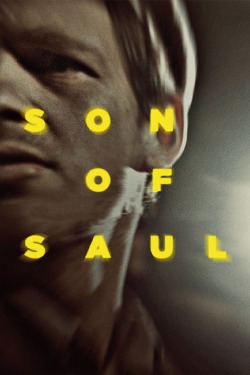
Review of Son of Saul (2015) by Billy B — 26 Apr 2016
An extraordinary film on so many levels. Especially so in the portrayal of the brutal industrialisation that was the mass killing process at Nazi death camps: a sensory assault of clanging metal doors, snarling German commands over the loudhailer system, and the hurried dragging of gassed bodies by ashen faced Sonderkommando, all under the cudgel blows from Capos.
Sonderkommando were groups of prisoners used as captive labour at the gas chambers, kept in line by Capos - bosses chosen from among them for their brutality, to control and drive the work pace. And that work pace was frantic. The pressure of convoys of new arrivals often meant the gas chambers running through the night. Being a Sonderkommando might give a man another few months of life - before they in turn were gassed, as fresher men picked from new transports were forced into new Sondercommando groups. These men paid the highest price for those few extra months. Forced to tell German lies to new arrivals they were hurrying into the gas chambers - that it is only hygienic showering, before food is served. Extracting the gold teeth. Dragging the corpses. Recognising relatives, or people they know, in the death queues. All in a claustrophobic underground concrete tunnel system, like a giant obscene abattoir.
For a brief moment, as Saul is transported to work in another part, we catch a glimpse of tranquil nature: some trees with birds singing. That this itself is a shock, compared to the frankenindustry we have been so immersed in, is testament to the power of this film. It is a raw power, probably the most accurate depiction of the gas chambers ever delivered. That verisimilitude brings us to one of the key comments on that genocide - Hannah Arendt's The Banality of Evil. She is speaking of the "normalisation" of the Nazi genocidal ideology, where, for instance, Krupps engineers released a study on the technicalities of strengthening wheel axles on rail carriages, noting that longer carriages would permit moving more people per train load to the death camps. Productivity efficiency gains in the mass killing industry.
One of the great achievements of Son of Saul is the portrayal of that banality, the driving bureaucracy behind this population killing program, and how that was maintained by an incessant high decibel enforcement system which terrorised prisoner labour into collaboration. A collaboration of no choice, since the slightest resistance brought instant death. All forced labour in the film moves at a frantic pace, to meet industrial killing targets and to show compliance.
In the end it is a film about the human need for dignity, even in the face of extremis. Saul intends to bury a boy he says is his son, and will stop at nothing to achieve that. In the process the film reveals another layer; the blackmail and other desperate means to which humans will resort, even among their kindred, when trapped in brute circumstances.
The idea that a person continues to consider dignity, in some form, even under extreme survival pressure, is strange but believable. There is the story in the documentary Shoah of Adam Czerniak, a Polish engineer and senator trapped in the starving Warsaw ghetto. He went to borrow money, 'but not to eat, to pay the rent so that he will not die in the street. The nature of human dignity.'.
See this movie. It is stellar, tells no lies, gives no ground to Hollywood feel-good, is an artistic and intellectual achievement, and is absolutely stuck-to-the-seat riveting.
This review of Son of Saul (2015) was written by Billy B on 26 Apr 2016.
Son of Saul has generally received very positive reviews.
Was this review helpful?