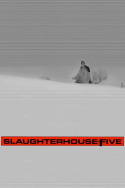
Review of Slaughterhouse-Five (1972) by Don T — 25 Sep 2009
Fond memories of watching on Channel 12 when I was a boy, I've always loved this warm film about a lonely optometrist, whose best friend is his dog, and who comes unstuck in time and lives part of his life on the planet Tralfamadore.
Having seen it many times over the years, it was interesting to re-view it. Michael Sacks is a revelation, and the film glitters with strong performances. It also offers a few set pieces of considerable power, notably the Dresden bombing sequences.
Philosophically it is somewhat prescient, as Pilgrim keeps espousing the Tralfamadorian ideal of life composed of random experiences that come and go, the best option for which is to focus on the good ones.
Indeed. Though George Roy Hill is not known as one of America's great directors, he is clearly interested in great subjects, such as the idea of capturing a life within the canvas of a less-than two hour film.
Slaughterhouse-Five succeeds at giving us this sense of a whole life, and the way memories echo back and forth through time and shape our present, and it does so in a complete way, fulfilling it's own meditative ambition of offering its reflection outside the bounds of linear narrative.
In that sense, oddly, it is a bit of a forerunner, an early experiment in non-linear narrative, although in this case it's almost non-narrative. With the Glenn Gould soundtrack entirely of Bach, it is a lovely way to spend a thoughtful hour and forty minutes.
This review of Slaughterhouse-Five (1972) was written by Don T on 25 Sep 2009.
Slaughterhouse-Five has generally received positive reviews.
Was this review helpful?