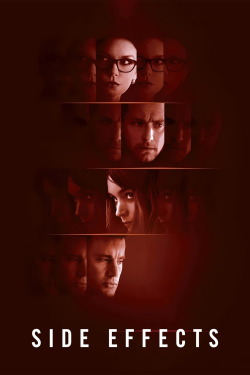
Review of Side Effects (2013) by Shiira — 12 May 2013
The side effects from a clinical trial on cortisone that the schoolteacher undertakes for his inflamed arteries doesn't so much bring about a new person into being, but rather, the miracle drug coaxes out the contemporaneous man who was there all along; a shackled shadow emancipated at long last, a projection made corporeal by a pill, in which Ed confronts his unfettered perceptions toward his hitherto role as the patriarch of a nuclear family, its bedrock.
Cortisone, a then-experimental steroid prescribed by Ed's physician to treat the consummate husband and father, while not an anti-depressant, nevertheless, in Bigger than Life, performs as one, in the sense that the elixir offers the patient an omnipotent feeling akin to total well-being.
But for Ed, the best version of himself doubles as the Avery family's worst nightmare, since his best version, the supposition that he is a pillar of the home and community, manifests itself as a facade that the cortisone excoriates; it's in fact, a truth serum, this pill, and the truth is, this congenial man, seemingly interpellated and calibrated to the languorous rigors of domesticity, suggests what George Bailey could have transformed into had the pecuniary windfall from his friends not come through: a cold-blooded murderer.
Robin Wood, a film theorist, writing about It's a Wonderful Life, famously identified George as a "cowboy hero", encapsulated best in Mary's drawing entitled "George Lassos the Moon", an inadvertently cruel housewarming gift that accentuates how the natural born wanderer fell short of his goal, having never left the homestead, the city limits of Bedford Falls.
In Bigger than Life, the cortisone is a salve which treats not only the malady that torments Ed, but it alchemizes the filmic text itself, as if the mis-en-scene was treated with the drug in a sort of celluloidal form, a latency, initially, gone undetected in the diegesis, gets diagnosed and is cured after a second opinion.
Ed, home from work, passes the television room where Richie, his son, watches a western, then greets Lou, manning the kitchen like a good housewife, but along the way, he passes a map of the world hanging in the hallway.
This unassuming atlas is an object in flux, rife with significance, after all, as when Ed, high on cortisone, alluding to the vagaries of his life's work, says: "I couldn't do it in an atmosphere of petty domesticity.
" Ed's disapproving facial gestures and especially his criticisms about Richie's inclination towards cowboy-oriented programming("Doesn't this stuff bore you?" he asks, adding, "It's always the same story.
"), once seen as abhorrence, now seems misread. Superimposed over the men and their horses, Ed sees his own face in the screen, turning the dialogue with Richie into a monologue, a soliloquy about the drudgery inherent in the multiple roles of the domiciled.
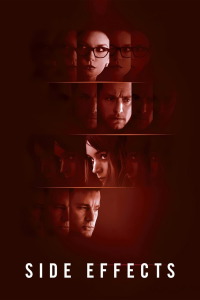
Like Ed, addled on drugs, who nearly kills his family, Emily, too, is on something while she hatches her murder plot on Martin, her crestfallen husband. More powerful than Prozac, or in this case, the fictional pill Eblixir, it's money that manages Emily depression, better than any anti-depressant.
Side Effects include: seducing a female psychiatrist, knowingly self-medicating one's self with a placebo: love, while allowing money's byproduct: greed, the quasi-drug's main property, as an excuse to stab a loved one with a knife under the bogus pretense of sleepwalking.
Similar to Scottie Ferguson who falls for the gambit which has Madeline Elster walking around San Francisco as the dead modeling subject of a painting incarnate, Martin, as well as Emily's current attending physician, Dr.
Banks, falls for the same somnambulist act too, with the difference being that the brains behind this money grab are women. Dr. Siebert's charge doesn't make the mistake of falling in love with her mark, like Madeline/Judy did with the acrophobic ex-detective.
The money in Emily's offshore account, no doubt, prevents any residual feelings of tenderness towards Martin from happening. The husband, imprisoned for insider trading, unlike Scottie, never perceives that he's looking at a double, never notices that the Emily he married is dead.
In a flashback, Side Effects shows us the couple at a lavish picnic, living the dream, just prior to the arrival of the police and Martin's imminent arrest. Side Effects is an inversion of the Vertigo: it recasts Judy as the femme fatale and Madeline as the woman in love.
Bigger than Life, released in 1956, has a touch of Hitchc*ck, as well, when Ed tries to clothe Lou with haute coutre, the same French fashions that his colleague wears. He turns his wife into Pat. The cortisone decodes "push" into "f*ck"; it's not car ttrouble that Ed and Pat are talking about.
Unlike Bound, in which the lesbian lovers choose love over money, for Emily, greed is by far the stronger drug, a side effect of capitalism.
This review of Side Effects (2013) was written by Shiira on 12 May 2013.
Side Effects has generally received positive reviews.
Was this review helpful?