Review of Shadows and Fog (1991) by Paul Z — 01 Oct 2009
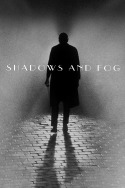
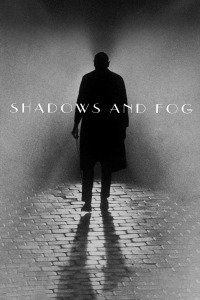
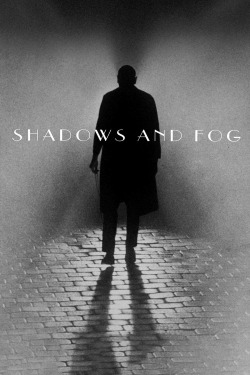
Shadows and Fog belongs with the Woody Allen canon of endeavors in other vanguards, along with Interiors, Stardust Memories, Zelig, The Purple Rose of Cairo, Another Woman and Alice by the time he made this film. It is another base he's covering, seeing how well he can make it come off, and moving on. It follows the aesthetic conventions and classic set design and lighting techniques of German Expressionist horror films from the silent era and pre-WWII German cinema. He reminds us of Fritz Lang's intense social crime dramas and Robert Wiede and F.W. Murnau's Gothic silent classics. It is a fascinating lost genre of movies, one of the most evocative film movements so far seen. It provides Allen and present DP Carlo DiPalma with a dark, antiquated European atmosphere and the expectation of sharp angles, great heights, long shadows and lots of symbolism using geometry and symmetry. It fulfills most of them and otherwise goes in its own direction. Nevertheless, it still remains his very darkest film.
Allen draws from his own one-act play Death, and defines it and landscapes it into a wandering mystery, much more than any prior film save Stardust Memories, interweaving some expected intermittent Woody gags, romance with Mia Farrow and Kafka-esquire philosophizing with a story about a meek employee named Kleinman, played by Allen of course, being awakened from a deep sleep and coerced by a vigilante mob. They claim to be looking for a killer who strangles his victims. In the ghostly town's arbitrary commotion, he is then left wandering without knowledge of his function in their plan, and has little luck in the way of anybody telling him. It is a metaphorical and symbolic journey that becomes not only his but that in which he is not involved, and thus out of his control, such as Irmy, the Mia Farrow character, a circus sword swallower whose love entanglements with her egotistical boyfriend, the circus clown, played by a rather underused John Malkovich, preoccupy her mind as she searches the city after packing her bags and running away in anger, or an unexpected and considerably eery scene where the killer shares a brief dialogue with his next victim before killing him; both characters' faces are obscured by the incidental placement of certain objects.
It is, indeed, enormously affected, and pretentious. That's a given no matter how one approaches this project. Essentially, it is a kind of movie Woody had never made before, and it's unlikely he will ever again. That in itself makes it a gem, because it is a rare treat. As many films as he has made, and in such a consistent time, and as often as he seems to repeat or parody himself, which he has often done, each film is wholly its own story with its own characters, visual approach and mood. Shadows of Fog is proof of that. If not that it just has a mind-blowing, immaculate cast---John Cusack, Madonna, in case you ever wondered if Woody would ever work with her for any reason whatsoever, Donald Pleasance, Lily Tomlin, Kathy Bates, Jodie Foster and Daniel Von Bargen appear indefinitely throughout in purely odd roles---it is too hypnotic and cryptic to be just an exercise.
This review of Shadows and Fog (1991) was written by Paul Z on 01 Oct 2009.
Shadows and Fog has generally received positive reviews.
Was this review helpful?