Review of Seven Samurai (1954) by Antonius B — 10 Mar 2018
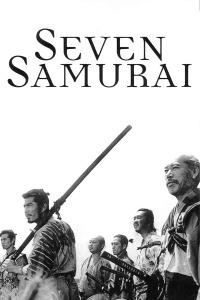
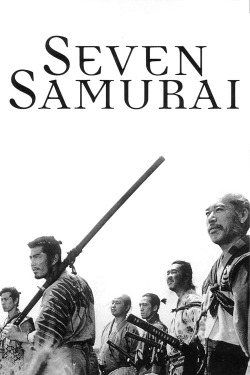
It's hard to heap more superlatives on this film given all those that it's received from countless critics and viewers over the years. It's certainly worthy of them. The story is perfect. The characters and acting are memorable. Director Akira Kurosawa has a fantastic sense of pace, and even at three and a half hours, every scene seems important. We're transported to 16th century Japan, a time when bandits terrorize the countryside and a village of farmers, but the film's themes are timeless.
As epic as the movie is, with a samurai team of six assembled one by one by its leader (Takashi Shimura), it would not have been the same without the seventh, a samurai-wannabe played by Toshiro Mifune. He's brash, exuberant, funny, brave, foolish, and heartfelt. He's in many brilliant scenes, but my favorite is when he describes what tricks the farmers may be up to, and we gradually understand that he himself was a farmer's son, with a tragic past. His performance is right up there with Brando in terms of intensity and honesty.
Kurosawa is smart in so many ways here, one of which is to orient the viewer to the village and its surroundings by showing the leader of the group plan its defense. In addition to Mifune's character, he also lightens the mood with the forbidden love between the young samurai apprentice (Isao Kimura) and a young woman masquerading as a boy (Keiko Tsushima). Their scene in the woodland flowers is gorgeous.
I love how the samurai are as tough as nails, but know they don't need to show it, and instead exude a sense of calm, playfulness, and understanding. With the exception of an extremely skillful and solemn swordsman (Seiji Miyaguchi), they smile in many scenes, and all of them accept the difficulty and danger of their fate. Despite their skill, they do not seek out violence. They are calm in moments of peace, intelligent in planning for battle, and brave and unflinching under attack. While the film and these character types have been emulated many times over the years, the difference between these samurai and western action heroes is still stark, and refreshing.
In this little village and the situation it faces, we see a microcosm of the world. Despite the mythic quality of a small outnumbered band of heroic samurai, the film has an authenticity to it. We see all of the very natural reactions to pressure. There are themes you might expect: honor, duty, discipline, and that sort of thing, but at its core, the message is the need to stand up to evil, and the great debt that we owe to those who have done so.
This review of Seven Samurai (1954) was written by Antonius B on 10 Mar 2018.
Seven Samurai has generally received very positive reviews.
Was this review helpful?