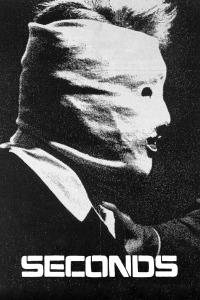
Review of Seconds (1966) by Robert H — 01 Jan 2006
An example of the visually experimental cinema that has come into greater acceptance with the early works of Roman Polanski and culminating with the independent movement of the 90?s, [i]Seconds[/i] fits nicely into any number of sci-fi thriller subgenres concerning the universal theme of technologies? uncanny ability to destroy the human soul.
Directed by John Frankenheimer (of the original [i]Manchurian Candidate[/i]), the film bears a particular, and perhaps even deliberately amateurish quality in its portrayal of the progression of events, whereas its astute sense of tension in even the most banal of settings still feels progressive in its tone.
A middle aged, average-in-every-way man is contacted by an old friend supposedly dead for many years, and is introduced to an organization that, through plastic surgery, a carefully staged ?death? and the jumping of the necessary legal loopholes, creates a new identity for its clients, allowing them to be young again and without the responsibility of an unwanted life.
At first hesitantly accepting (in no small part due to the threat of blackmail otherwise), Arthur Hamilton becomes Tony Wilson, a Californian artist already moderately established in his profession. It is with this scenario that the film attempts to provide a perspective on the culture schism between the conservative elder class and the blossoming hippie culture, centralized around a low-grade Woodstock festival and grape-crushing orgy sequence.
The film?s cultural views are far less interesting or insightful than any of the social and moral implications already inherent in the process Arthur goes through, which only reach any real poignancy during the films admittedly predictable however tragically ironic conclusion, somewhat foreshadowed by mostly clunky exposition that would normally indicate a talent far less experienced than Frankenheimer?s.
James Wong Howe?s black and white cinematography is particularly striking, making even the most out of interesting but unnecessarily out-of-place camera tricks and trippy photo effects, but even the most proficient cinematic work can only make so much out of a flawed script that never establishes its central events as much more than a porthole for the obtuse and abnormal, and fails to carry through with its themes beyond a pat, moralizing resolution.
Even despite the lack of focus to the majority of the proceedings, Rock Hudson manages a respectable performance, at least by B-movie standards, as the transformed Wilson; he evokes a character of repressed humanity adapting an existence that is, above all else, a lie, and admirably so in light of the fact that the script gives him so little to work with.
More than anything, [i]Seconds[/i] represents a time capsule of cultural paranoia; flawed, but not without its distinguishing qualities.
This review of Seconds (1966) was written by Robert H on 01 Jan 2006.
Seconds has generally received very positive reviews.
Was this review helpful?