Review of Saturday Night Fever (1977) by Ryan M — 15 Aug 2009
***1/2 out of ****.
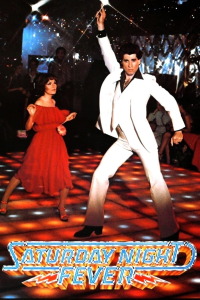
The world can be a scary, cruel, relentlessly depressing place; but only if we want it to be. That is one thing that John Travolta's character in "Saturday Night Fever" - named Tony Manero - understands to the very core. The story of the film is this: Tony spends most of his hard-earned cash and time dancing his suave butt off at a local Brooklyn club called the 2001 Odyssey. He's been dubbed the king of the club, as he sure knows how to put on a good show with his dance moves and his cool, calm, and collected attitude. To state the obvious and the necessary; the club is the only place in which Tony finds true happiness.
Outside of the club, Tony's life is a train-wreck; and we are the voyeurs in the extensive crowd of perverse onlookers. His father is easily the most powerful man of the house; he certainly has objections and shows disapproval for Tony's nighttime life-style, but he keeps such thoughts to himself. Then, there's his poor mother; who finds the ultimate solace in a self-doubting priest. To make matters worse, Tony's life is no better on the streets than it is at home; he's ditched school and formed a strong, diverse circle of friends amongst some local kids around his age. Together, they form a sort of gang; they're mischievous, destructive, and free-spirited. They're also young.
Tony attempts to ease the pain which he cannot escape by forging romantic relationships with women who also share a similar interest in the 2001 club. There are two women in his life, among others; one is a member of the gang - named Annette (Donna Pescow) - and the other is a fellow dancer by the name of Stephanie (Karen Lynn Gorney). Both have but one thing in common; they love Tony. But whether he loves them or not is the problem; Tony's home and only love is the dance floor, women are but a diversion. But you know what they say: women...can't live with 'em; can't live without 'em. I'm sure Tony has taken such a philosophy into consideration and applied it to his life more than once.
"Saturday Night Fever" has been deemed a classic by many movie-goers, film critics, and historians alike. It's loved by many; disliked by only a few. Heck, just a few years back in 2010; it was accepted into the National Film Registry. To be accepted, a film must be "culturally, historically, or aesthetically significant". Indeed it is. This is the kind of movie that audiences both young and old look back on, only to smile. But of course, the only other thing one could do - the only other emotion that one could honestly elicit - is that of either apathy or sympathy for the sorry souls dealt with in the complicated, emotionally resonant narrative.
The film has style. The original soundtrack by Bee Gees lets us know that from the opening frames and beyond; you know a movie that starts out by playing the now-famous "Stayin'Alive" over the image of Travolta walking the streets of Brooklyn and running a plethora of assorted errands is going to be all kinds of bad-ass, and thank God it is. "Saturday Night Fever" is thoroughly entertaining, and it wouldn't have been remembered at all if not for the essential ingredients that make its formula work so well. The soundtrack is energetic, the dance scenes are electrifying, and John Travolta delivers a hell of a performance; perhaps even one of his best. No matter, the image of Travolta donning the white coat on the dance-floor isn't particularly easy to just forget. It's made its mark on cinema; and its here to stay, just like the movie.
Never the biggest fan of films that rely on the "cool" factor to succeed with movie-goers both casual and full-time passionate; the film certainly needed something more to register with me personally as a worthy classic that lives up to its reputation and reception, and I'll be dammed if that certain something isn't a surprisingly solid dosage of emotional depth. The story is told in a fashion where it's easy enough to like and follow; but the screenwriter, Norman Wexler, treats the human beings in this movie not only as subjects, but also as real people. They have real problems, real lives, and they say realistic things. If you add all those things together, you've got rich, believable, engaging drama.
This movie will appeal to a lot of people, so I don't think I need to tell you of whether it's a recommendation or not. I've said my part; and pretty much everything else I can say. There are no doubt those who like the film even more than I do, and also are genuinely better at stripping it down to its bare essentials and explaining every last inch of the picture; thus, they are the people to go to, not me. All I can say is that, good or bad, it's more than the standard dance flick that it both inspired and could have easily become, if not for the miraculously good writing and direction that it was blessed with. From beginning to end, I had the sense that I had caught on to this titular "fever"; give it a chance, and it's very likely that you'll feel the same. You'll hear the music and start tapping those toes; oh, I wish more movies could be like this.
This review of Saturday Night Fever (1977) was written by Ryan M on 15 Aug 2009.
Saturday Night Fever has generally received positive reviews.
Was this review helpful?