Review of Saraband (2003) by Renate V — 22 Mar 2009
Bergman is deeply aware of the gap that separates "saying" from "meaning". His characters always put honesty before consideration, and this is usually the drama they are faced with.
His plots take place in the hiatus that separates the depth of thoughts and feelings from the surface of expression. The soothing, conventional expressions, the high-sounding words of love and gratitude, the hollow and pathetic apologies are never uttered, or when they are they do not come without a sense of betrayal.
The most genuine impressions are faked as soon as spoken-- because as soon as they are shaped into words one becomes aware of what one is saying; feeling gives way to acting, and, in an irony that reveals the ambiguity of the very word "acting", we, the actors, immediately become spectators of ourselves.
We then listen to ourselves speaking, we weigh the words against their meaning and watch ourselves as if from outside while hoping to speak from the inside, and in taking the utmost care to make sure the words and gestures are convincing, we betray them with a false, phony spontaneity.
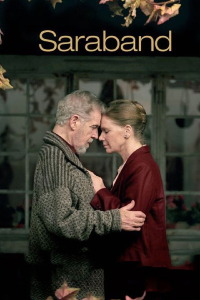
This complex tension between words and meaning, spontaneity and acting, truthfulness and consideration, is the matter of which Bergman's movies -- particularly Scenes from A Marriage, together with its sequence, Saraband-- are made.
There's a grain of contempt in every spoken word, Nietzsche said somewhere. In Bergman, each word is spoken as if the speaker, or even the words themselves, were painfully aware of the contempt they carry and the betrayal in which they incur.
And because of this they carry a weight and a significance that are rarely to be found today, when the right expression comes instantly on-demand and tailored for the right situation, and words abound full of sound, fury, and little else.
This review of Saraband (2003) was written by Renate V on 22 Mar 2009.
Saraband has generally received very positive reviews.
Was this review helpful?