Review of Road to Perdition (2002) by Reelviews94 — 23 Mar 2016
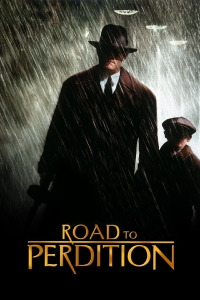
Moody, methodical and measured, “Road to Perdition” takes a brooding look at the wages of sin and the heritage of violence among hoodlums during the dark days of Prohibition. Predominantly concerned about the passing of nasty traditions from fathers to sons, and the strenuous effort of one killer to be redeemed through his boy, Sam Mendes’ much-anticipated second effort after his Oscar-winning “American Beauty” finds him working in a very different key while displaying an even more pronounced attentiveness to tone, genre variations and artistic niceties. Absorbing drama sees Tom Hanks fitting comfortably into the role of a morally aware bad guy, and while history has shown that one should never underestimate Hanks’ extraordinary B.O. draw, production’s autumnal feel and A-plus awards-season pedigree will make it fascinating to see if DreamWorks can pull off its gamble of putting this over as a summer attraction that can successfully duke it out with the more obvious popcorn pictures. Its seriousness notwithstanding, crime drama looks to play well with all audiences, although appeal to women could be somewhat limited.
“Sons are put on this earth to trouble their fathers,” Illinois mob boss John Rooney (Paul Newman) confides to his top enforcer and surrogate son, Michael Sullivan (Hanks), a remark that has deep significance for both men and frames the concerns of the movie. Rooney, now an old man, has seen his biological son, Connor (Daniel Craig), go hopelessly astray into reckless (as opposed to “respectable”) criminality, while Sullivan still hopes he can somehow keep his two pre-teen boys from inheriting his bloody legacy, having kept the nature of his work a secret for as long as possible.
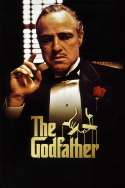
It’s a potent theme, one that recalls not only “The Godfather,” with which “Perdition” shares “family” concerns, a dark look and period detailing, but also such explosive father-son dramas as “East of Eden.” The connections to Coppola and Kazan are telling in the precision performances, resonant settings and perhaps above all in the unhurried pacing; while crisply edited and unindulgent, Mendes’ work is gratifyingly old-school in its rejection of modern-day stylistic agitation, the better to achieve a slow but inexorable build to its climax.
At the 45-minute point, they hit Chicago, beautifully evoked on modern La Salle Street with a modest amount of digital erasures to convey 1931. Sullivan offers to go to work for Al Capone’s (real-life) right-hand man, Frank Nitti (Stanley Tucci), for whom he has done jobs in the past. But Nitti’s ties to the Rooneys prove more binding, resulting in the Italian’s recruitment of gimpy freelance hitman (and professional crime-scene photographer) Maguire (Jude Law) to do Sullivan in.
Film’s second half, then, consists largely of a slow cat-and-mouse chase, with Maguire pursuing his prey across the flat Midwestern rural landscapes while Sullivan tries to stay one step ahead, break through to the son to whom he’s never been close and even get the upper hand on the Capone gang. The latter he achieves through the ingenious ruse of robbing small-town banks where the Chicagoans have deposited “dirty” money, a sequence of events wonderfully and concisely expressed in a fluid montage of lateral left-to-right tracking shots intermingled with Maguire calmly rolling a quarter through his filthy fingers.
In one very fine scene, Maguire catches up to Sullivan in a lonely roadside diner, where they exchange some cryptic remarks before the inevitable fireworks. Significantly less satisfying is a crucial encounter Sullivan has with a mob accountant (Dylan Baker) who inexplicably is running around the boondocks with incriminating financial documents in hand. After Sullivan manages to exact the rain-soaked revenge he has so patiently sought, climax and coda fulfill the promise of fateful inevitability while providing the right measure of final dramatic release.
Practically every effect in the movie has been calibrated to the nth degree, from the nuances of the family dynamics and the color coordination of the decor to more subtle details such as laying a coffin on ice to keep the body cold but also to link with the winter snow outside, to emphasize the frigid ossification of the mobsters’ lethal behavior patterns. But the picture is able to deflect charges of preciousness by putting narrative and character first; it’s suffused in a distinct sense of aestheticism, but not artiness.
Thomas Newman’s inventive score, while appropriately serious toward the end, seems intent upon lightening the mood earlier on with some overly busy and cutesy orchestrations and melodic doodlings. Of all the film’s accomplished creative contributions, certainly the most notable is Conrad Hall’s extraordinary cinematography.
This review of Road to Perdition (2002) was written by Reelviews94 on 23 Mar 2016.
Road to Perdition has generally received very positive reviews.
Was this review helpful?