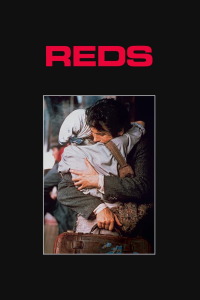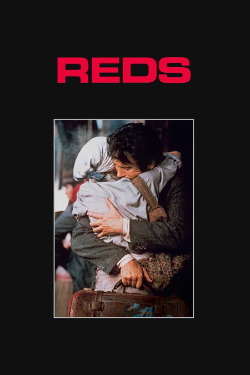
Review of Reds (1981) by Laura C — 12 Feb 2006
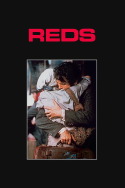
[font=Arial]I caught the film [i]Reds [/i]last night on TVO's [i]Saturday Night at the Movies[/i], which shows great classic films.[/font].
[font=Arial]I was indifferent about watching the film, even contemplating putting in a DVD from my personal collection, but I gave it a chance. It didn't take long before I swept up in the passion, excitement, culture, and politics.[/font].
[font=Arial]The film was written, directed, and produced by Warren Beatty. I've perceived him as a solid actor until seeing [i]Reds[/i]. It took him over a decade to realize the idea, research, conduct interviews and begin financing the film. I can only imagine that the 3 hour and 20 minute film, a definite epic, was a monster to film. I respect his dedication and passion for the project.[/font].
[font=Arial]I immediately identified with Diane Keaton's character, based on real-life author Louise Bryant. She becomes involved with journalist, turned revolutionary writer, turned left-wing politician, Jack Reed (Beatty's character.)[/font].
[font=Arial]They meet in Portland where Louise is bored. The opening scene is very telling. As her husband and her are viewing some art work, he realizes that there is a nude portrait of Louise, shot mostly showing her back. Her husband is horrified that their friends will see her naked, but Louise brushes him off[/font].
[font=Arial]When she interviews Jack for an article she's writing, there is an immediate connection. She takes him to her loft, lies about being married, and they spend the night talking, or rather he talks.[/font].
[font=Arial]Even though Jack later finds out Louise is married at a social function, he seems more enamoured with her than their first meeting. He seems attracted to her independence as well as her interest in writing. He asks her to move to Greenwhich Village with him and she accepts. That is the beginning of their long complicated love affair[/font].
[font=Arial]. [/font].
[font=Arial]The film manages to create a perfect balance between grand political ideas and intimate details of a couple who negotiate a life together when they are often seperated. The idea of 'free love' is tested. [/font].
[font=Arial]Louise has her own struggles; living in the shadows of Jack's larger than life persona, her professional ambitions, and feelings of inadequacy in almost every area of her life. She felt terribly intellectual in Portland, but is blown away by Jack's cerebral friends. She often feels isolated as she drinks and listens, but does not have the confidence to join the conversations or debates.[/font].
[font=Arial]As Jack begins by protesting the war, joining the socialist party, then heads his own even more liberal Communist Labour Party of America. We see this man as an idealist to be admired on one hand, and on ther other, a man swept up in fervent politics that become idealistic to the point of absurdity. When a new party fractures and a new one results, I couldn't help but wonder, where does that end?[/font].
[font=Arial]At one point Jack is in Russia with his friend, anarchist Emma Goldman. They discuss the Russian Revolution and Goldman talks of the many deaths that have resulted in the rebellion. She wonders if the revolution is worth the loss of innocent lives. Jack passionately rebuttles that one can only expect such tragedies in the face of revolutions. It is appearant that despite Jack's resolve his spirit is waning, for how can one simply see the loss of lives as a necessary evil? It is one thing as a theory and quite another to see the theory in practice.[/font].
[font=Arial]The historical nature of the film strengthens the love story. The questions Jack faces in his political activism are hardly more difficult than his relationship with Louise, which is the backbone of the story. I cared about these characters immensely and I see that as the film's greatest strength. For such an epic film it did not feel cold or distant. The majority of the film was shot inside; buildings, jails, and homes.I began to feel at home in Jack and Louise's world, to the point that I mourned each move and each seperation.[/font].
[font=Arial]Secondary characters were well developed. The 32 witnesses who lived in that era of World War I, and who knew or knew of Jack and Louise add such an interesting perspective. I wasn't sure if they were actors. Wisdom and a life full of memories is reflected in each warm and wrinkled face, they drew me even further into the film, that by the end felt more like an experience.[/font].
This review of Reds (1981) was written by Laura C on 12 Feb 2006.
Reds has generally received very positive reviews.
Was this review helpful?