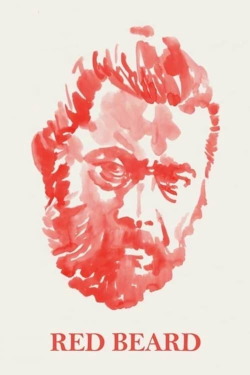
Review of Red Beard (1965) by Matthew D — 02 Feb 2010
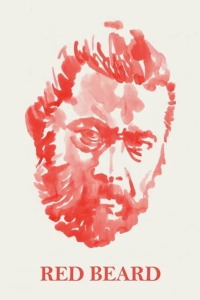
I watched Akiria Kurosawa?s, Red Beard, last evening for what must be the tenth time. Red Beard is an unusual film ? a collection of vignettes that take place under the overarching story of a young doctor, Noboru Yasumoto, who finds himself not a Shogun?s doctor, but rather exiled to a remote and impoverished clinic headed up by the doctor known as Red Beard (Toshiro Mifune).
In this, his last work with the great Mifune, Kurosawa was accused of making a film that borders on bathos. One critic called it a ?protracted retelling of General Hospital in 19th Century Japan.? Apparently, even Kurosawa came to wonder if Mifune had correctly represented Red Beard after drawing some criticism from one of the scriptwriters who felt that the role was not well played.
It?s true, there is no doubt that the pathos of this film is pronounced, even extreme at times. And it?s true that the ?story? does sometimes seem disjointed. However, I think these criticisms are small in comparison to what Kurosawa achieves. In each of the stories that exist within the larger story of Yasumoto learning what life is really about, death and suffering are the common themes. Through these stories, the viewer learns that death and suffering are not without meaning?and that love and hope can be found even in the very bleakest of circumstances. Much emphasis is placed upon the beauty of sacrifice for the common good. And, in each of these stories, we learn that underpinning everything is a previously unseen streak of good and kindness in humanity?and that something beautiful can result from any circumstance.
One of Red Beard?s first commands to his young and cocksure charge is to watch over a dying man, for ?nothing is so solemn as a man?s last moments.? Indeed Yasumoto is shaken to his core as he watches the dying man ? a man who has suffered some great misfortune, but would not and now cannot speak of it.
In the end, Yasumoto has the opportunity to be where he set out to be when he began to study medicine ? the doctor to the Shogun?and rich. Instead he opts to remain in material poverty with Red Beard to care for those who cannot care for themselves. Over Red Beard?s warnings he says, ?I?ll stay no matter what. You taught me the road to take. So I will take it.?
Though the ideals expressed in Red Beard are universal in their appeal, they also have a distinctly Japanese quality. The good of the individual is to be found in the good of the collective whole. In that sense, the film is, in my view, a much needed counterbalance to our own American individualism. We think we find the path to happiness by fulfilling our own needs, when, somewhat paradoxically, we best fulfill our own needs through friendship, love and, when necessary, sacrifice for others.
Visually, the film is stunning. As in all of Kurosawa?s work, the lighting in particular is amazing. As a still photographer, perhaps I watch films differently than most. I appreciate good composition. So many of the compositions within Red Beard seem to me like still photographs.
Red Beard is my favorite film. In it all the blood, beauty, pain, sorrow, loss and love of life is brought together with that distinct tenderness, insight and artistry that Kurosawa had. Perhaps few would call this his greatest work. But, to me, it?s his most wonderful achievement.
This review of Red Beard (1965) was written by Matthew D on 02 Feb 2010.
Red Beard has generally received very positive reviews.
Was this review helpful?