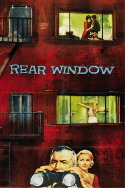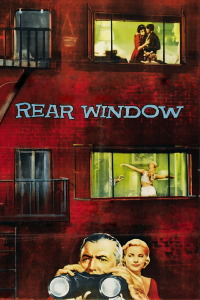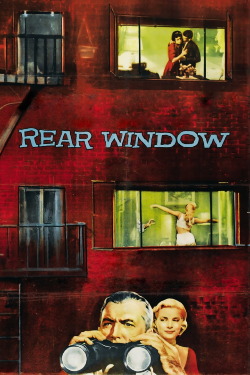
Review of Rear Window (1954) by Cameron J — 20 Mar 2014
Oh, James Stewart, you old creep, looking at people's rears through the window. Well, that was cheap, but come on, people, he's working with Grace Kelly here, so you can blame either myself for making such a joke or him for making it too true to be a joke? Shoot, I think Alfred Hitchcock made that joke too true to be funny, because I'm betting he harassed this lovely little Hitchcock blonde something fierce, and yet, she still showed up for three of his films in a role. I'm telling you right now, I don't know how they could easily follow this up with "To Catch a Thief", because this whole "To Catch a Murderer" seems a little more interesting. Well, in all fairness, the tension is watered down a little bit by the fact that the protagonist spying on a potential murder case is wheelchair-bound, in addition to the fact that the protagonist in question has James Stewart's voice. Well, Grace Kelly did always make things a little more interesting, no matter how hard it is to take Stewart's voice all that seriously. It certainly helps that the film is pretty darn good, although its intrigue, while certainly there, is limited a touch, no matter how much storytelling tries at times.
Yet another mid-20th century Hollywood opus, and one by a melodramatist the likes of Alfred Hitchcock, this film has its histrionics, compensated for enough by inspired storytelling to be bought, but for only so long, before you can't help but feel as though there's a certain inconsistency to subtlety to this thriller. Yes, there is an unevenness to subtlety here, and as irony would have it, that's among the more consistent attributes to the tonal layers of this drama, which juggles fluff, intensity and drama, and not as organically as it perhaps could have, resulting in a sense of unevenness to tone that shakes the effectiveness of the tonal extremes. Even pacing goes tainted with unevenness, which is to be expected, as the film flirts with a two-hour runtime, despite a minimalist plot, which it slowly, but surely unravels through dialogue ramblings and meandering happenings that quickly slip into repetition, and sometimes go so far as to shake the grip on brisk momentum. Hitchcock and screenwriter John Michael Hayes do such a solid job of handling thoughtful material that dullness never ensues, although there are bland spells, which join the histrionic spells and tonally uneven spells in limiting a sense of urgency to this thriller. Needless to say, these momentum slips are few and far between, but it's not as though the film ever picks up all that much, obviously having enough meat to compel pretty thoroughly upon being interpreted, but plaguing such engagement value with quite a bit of sensitivity. This is a minimalist drama whose execution works so hard that it's hard to not be engrossed through and through, and yet, the minimalism is sometimes brought too much to light by unevenness to subtlety, tone and pacing for comfort. This film could have easily underwhelmed, but at the end of the day, it rewards, doing as much justice as it can to a small-scale character study, largely with the help of the portrayals of the characters.
While the script certainly put a lot of dramatic meat of the bone that is this narrative, the basic story concept has so little meat that acting material is still pretty limited, demanding that the members of this solid cast at least deliver on charisma, which is, of course, delivered on so thoroughly that most every performance endears about as much as it would have if dramatic material was more prominent. James Stewart particularly charms as an avatar audience, and his convincing interactions with everyone else sell the L.B. "Jeff" Jefferies role as distinguished by its own right, so even the performances, despite their being underwritten, play a sizable role in bringing this story to life. Make no mistakes, there is plenty of potential for life to be placed into this story, which is might small in scale and lacking in dramatic momentum, but still pretty meaty, and even refreshing for that matter, having then-unique and still-distinguished ideas as minimalist, everyman-led murder-mystery opus whose interpretation really can make or break compellingness. Screenwriter John Michael Hayes cannot quite get as firm of a grip as he probably should on consistency to tone, pacing or even subtlety, but the man sure does try hard, and such effort succeeds time and again, limiting the inconsistencies that I've been complaining so much about, and delivering on enough genuine characterization and clever dialogue to sustain intrigue through all the lapses in dramatic and structural momentum. Bite is limited in the story concept that goes interpreted by an inspired script, and even in the inspired script in question itself, but at the end of the day, the sheer confidence places into the writing of this drama which is so reliant on its writing grips with much in the way of effectiveness, which still needs to be done further justice if the story is to truly grip. That is where Alfred Hitchcock comes in, as his traditional directorial performance is particularly effective here, with a visual style that subtly draws you into the environment which is so important in this drama of only so much setting dynamicity, and sells a sense of claustrophobia that isn't so overwhelming that other aspects of thoughtful storytelling fail to produce more of a sense of diversity than a sense of inconsistency to the tonal layers, most all of which are drawn upon with equal effectiveness. Whether it's being colorful as a subtle fluff piece, or being compelling as a character drama, or being biting as a thriller, Hitchcock's storytelling style is more consistent in its effectiveness than the scripting is consistent in its handling of tone to begin with, and such directorial inspiration, backed by inspiration in acting and writing, carry the final product quite the distance, carrying it through all of the potential shortcomings, until the final product stands as surprisingly quite engrossing.
Overall, the sheer natural limitations to the meat of this minimalist drama, worsened by an execution which goes plagued with inconsistencies in subtlety, tone and pacing, threaten the final product, which goes carried quite a distance by the strong performances, writing and direction behind a genuinely refreshing idea that allows Alfred Hitchcock's "Rear Window" to transcend its shortcomings and reward as a minimalist thriller.
3/5 - Good.
This review of Rear Window (1954) was written by Cameron J on 20 Mar 2014.
Rear Window has generally received very positive reviews.
Was this review helpful?