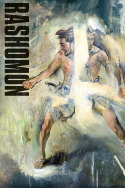
Review of Rashomon (1950) by Richard C — 10 Dec 2009
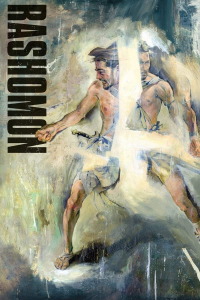
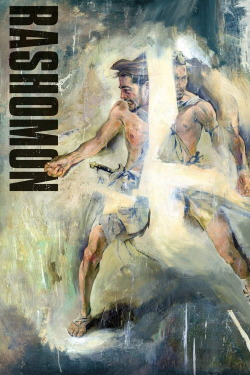
El caso de un hombre que murió y cuya esposa fue violada es tomado desde distintos puntos de vista en el Japón medieval.
En el juicio, tenemos la oportunidad de oír las versiones del delincuente Tajomaru, que protagonizó el incidente, la viuda, e incluso el muerto, a través de una medium. Cada versión es diferente de la anterior, e incluso después del juicio tenemos una nueva versión disponible, del leñador que presenció la escena, así es que debemos decidirnos y escoger la que nos parezca verdadera, o quizá ninguna de éstas...
Lo que más me gustó de la película fue la manera en que abordaron el problema de la verdad, dejando la decisión para nosotros.
No me gustó...bueno, nada en realidad.
La actuación es excelente, con soberbias interpretaciones de cada uno de los personajes, especialmente el bandido Tajomaru.
Asombroso podría ser un adjetivo apropiado para describir la fotografía, ilustrando el Japón clásico de la Edad Media.
La narración es notable, intrigante en verdad, conduciéndonos a un juicio moral interno.
Los efectos especiales son bastante buenos, sin embargo, sólo tenemos un par de ellos, dado que no son realmente importantes en la trama.
Mi calificación: 5 estrellas de 5. Una Obra Maestra.
-------------------------------------------------------------.
The case of a man who died and whose wife was raped is taken from several points of view in the medieval Japan.
At the trial, we get the chance to listen to the versions of the bandit Tajomaru, who starred in the incident, the widow, and even the dead man, through a medium. Each version differs from the previous, and even after the trial we have a new version available, from the woodcutter who witnessed the scene, so we have to make up our minds and choose the one we think is true, or maybe none of them...
What I liked the most about the movie was the way they approached the problem of truth, leaving the decision to us.
I didn't like... nothing actually.
The acting is excellent, with superb character interpretations, specially that of bandit Tajomaru.
Astounding could be a fitting adjective to describe photography, depicting classic Middle-Age Japan.
The storytelling is remarkable, intriguing indeed, leading us to an inner moral trial.
Special effects are pretty good, however, we only have a couple of them, since they are not actually important in the plot.
My rating: 5 stars out of 5. A Masterpiece.
This review of Rashomon (1950) was written by Richard C on 10 Dec 2009.
Rashomon has generally received very positive reviews.
Was this review helpful?