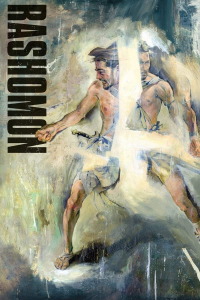
Review of Rashomon (1950) by Horvath S — 23 Dec 2015
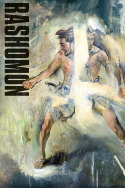
Akira Kurosawa's Rashomon is famous for recounting a murder from several eyewitness points-of-view, all of which are drastically different, but similar in some aspects. After watching this movie a number of times, I've come to the conclusion the woman committed the murder of her samurai husband, and each witness claimed otherwise for their own motives.
1) In all of the accounts, the wife wanted her husband to be killed.
2) The first account is from Toshiro Mifune's bandit. He gleefully boasts of a valiant battle with the samurai (at the wife's request) before killing him. He claimed the killing because he knew he would hang for it anyway, and wanted to boost his own reputation by claiming to have defeated a samurai while also protecting the wife who he was infatuated with. When asked about the wife's missing dagger, he seems caught off-guard.
3) The wife testifies after she was raped by the bandit, her husband looked at her with cruel contempt. She is playing the total victim, pleading for sympathy from the unseen judges. She claims to have blacked out and found her husband stabbed with her dagger when she came to, although we presume she killed him and left that part out. She hadn't heard the bandit's version, so she can't place the blame on him.
4) The samurai tells his story from beyond the grave through a medium, which adds another level of unreliability. In his version of the story, he never fought the bandit, even though his wife asked the bandit to kill him, and he killed himself with his wife's dagger. He is a samurai and wouldn't admit to being defeated in battle by a bandit or killed by a woman, so claiming to kill himself allows him to be remembered honorably, which would be more important to him than justice.
5) The woodcutter tells the final account after the trial. His story feels the most authentic. The bandit and samurai are scared as they fight to the death at the wife's request. The story more closely resembles the bandit's version, but the bandit comes off as more desperate in the woodcutter's version. The woodcutter, who had heard all the accounts, makes the ending match the bandit's to cover his own theft of the dagger.
I've come to the conclusion the bandit fought the samurai and beat him as told in the bandit's and woodcutter's accounts, but didn't kill the samurai. After leaving the samurai on the ground, his wife finished him off with the dagger, which was then stolen by the woodcutter.
Of course, every viewer has their own interpretation. I love that this movie is not one that can be viewed passively, but can be reflected on long after and with multiple viewings.
This review of Rashomon (1950) was written by Horvath S on 23 Dec 2015.
Rashomon has generally received very positive reviews.
Was this review helpful?