Review of Peyton Place (1957) by Robert H — 06 Feb 2015
The Hollywood melodrama is a magical thing. You could fixate on one for a century, devouring its unrealistic rosiness and torrid, intermingling plot lines. Some directors (William Wyler, Edmund Goulding) are able to nourish them, managing to turn camp into something classier than overwrought trash. But then there are others (Douglas Sirk, Billy Wilder) who can see the fun in the fluff, commenting on the usual inauthenticity while still making a top-notch product.
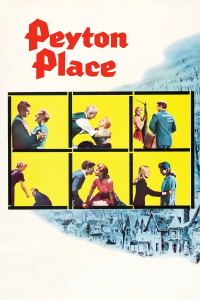
"Peyton Place" is the grandaddy of all Hollywood melodramas, not quite self-referential but not quite forgettable. It's just right. At nearly three hours, it is everything "Days of Our Lives," "The Bold and the Beautiful" ever wanted to be. It has only three moods: romantic, stormily melodramatic, or vanilla, like "Leave It to Beaver." These moods never mix together - there only seems to be room for the loudest of colors, shades and subtleties burnt to a crisp. Every scene is designed with the dramatized emphasis of a fashion magazine photoshoot, practically screaming that, yes, the film has a big-budget, and yes, it can afford to be filmed in CinemaScope.
"Peyton Place" isn't a smart melodrama cut from the same cloth as "Written on the Wind," but thanks to shows like "Twin Peaks," vintage soap has been given an entirely new edge. Instead of watching one for its unfiltered clutter, there seems to be a satirical acidity at play, even if it isn't on purpose. Landscape shots have the phony cheerfulness of a tempting postcard. Neighborhoods are decked out with white-picket fences, green grass, sunny skies, and clean-cut youths. Everything is too immaculate. You can sense that there is a lot of drama going on behind closed doors.
To explain the piling of storylines would be like patting my head and rubbing my stomach while typing; it has the same complexities as a family tree of socialites. All I will say is that Lana Turner is named Constance McKenzie (a name that was perhaps chosen by a soap opera character generator), and she, along with her daughter (Diane Varsi), acquaintances, and old-time friends, live in Peyton Place, an idyllic town stationed in rural New England. Gossip travels faster than a speeding bullet, romances begin as often as babies are born, and a scandal can destroy a person's life with more painful than a knife to the chest. I may enjoy watching tragedy happen to other people, but is it wrong to say that I would not be opposed to living in a town this exciting?
In "Peyton Place," a blistery kiss or a bitch slap to a well-endowed mug become the equivalents of a fiery explosion. It is hammier than Bette Davis eating a ham sandwich with Joan Crawford and Miriam Hopkins; there is plenty to stare at and gasp at and cry at and emote at, however ridiculous. We know that it's bad for us, but it's impossible not to devour something that wraps us up in a tweed suit and transports us into a parallel universe of cracked perfection. Youths are either loose cannons on full throttle or suppressed lightweights waiting to blow up. The passive aggressive judgment of Peyton Place eventually sets their path and decides if they will be the talk-of-the-town for the rest of their life or the neighbor you beam at when you pass them at the grocery store.
Fittingly, the film became a hit not for its merit, not for its acting, not for its artistic capabilities, but because of a scandal possibly too jaw-dropping for the confines of Peyton Place. Long story short: At the time, Lana Turner was dating Mickey Cohen's right-hand man. One night, he flew into a rage, and, in response, her daughter came to her defense, stabbing him to death. "Peyton Place" had been out for months, making little money, but once the nonstop headlines began, it became the second highest grossing movie of 1958. Looking back, the Turner ordeal was and still is the kind of shit America feeds on with a frenzy. No one wants to admit that they enjoy some garbage here and there, but I'm sure the majority of "InTouch" readers indulge themselves not because they find value in celebrity gossip but because they find all the melodramatic lies to be a hell of a lot more entertaining than the intellect of "Vanity Fair." As far as publicity goes, "Peyton Place" got its sharing served on a silver platter. What better suits faux soap than real soap?
But even with the unforgiving attention surrounding her, Turner has certainly never been better. Throughout the 1940s, she was mostly placed into the shoes of the sexy love interest, sometimes a femme fatale and sometimes the sweet girl you can't wait to go home to after fighting overseas. In "Peyton Place," she is appealingly breathy, always ready with cocked eyebrow, perpetually pissed off at how her messy past affects her currently dusty one; she blows cigarette smoke as if she's late for an upcoming confrontation with an old mistake. Turner carries the weight of the film on her shoulders, working as its emotional core and its best actor. Some could declare her work as pure overacting, but on "Peyton Place"'s terms, she comes out as a champion. Few can say that murder lead to their career resurgence, but Turner is more than able.
One could accuse "Peyton Place" of being too preachy to be completely successful, but its influence is undeniable. It propelled the careers of talented youths (Ross Tamblyn, Hope Lange), and lead to a popular TV spin-off in the 1960s, setting the standard for modern soap operas. As a standalone film, it works as a well-made, wildly entertaining soaper. The two-hours and 37 minutes go by with lightning speed; one could say that the film is too short, a good sign if there ever was one.
This review of Peyton Place (1957) was written by Robert H on 06 Feb 2015.
Peyton Place has generally received positive reviews.
Was this review helpful?