Review of Paris, Texas (1984) by Greg W — 22 Nov 2014
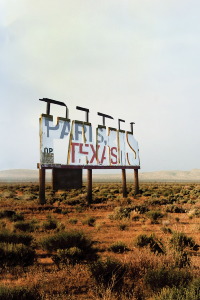
The beautifully-filmed "Paris, Texas" tells a story, and tells it in a way, that is both novel and hauntingly familiar. In its opening moments it seems almost to be a spaghetti Western. It has the dusty badlands and close-ups of the cracked, inscrutable face of a mysterious protagonist (Harry Dean Stanton). He says nothing, and when others speak it is often with a European accent, reminiscent of those that were poorly dubbed over in the old Italian and Spanish gunslinger films. A German-inflected townie in Terlingua-is he a doctor? law enforcement? just a drinker? probably all of the above-is straight out of a great noir or adventure film, channeling the untrustworthy gregariousness of Sidney Greenstreet in "Casablanca" and Walter Huston's old-timer expatriate in "Sierra Madre." But the mystery the movie introduces in its opening scenes feels new and exciting: a man who will not talk, who has a history but seems not to remember it, who has walked so long through the desert that his shoes are worn through.
Director Wim Wenders tries out several different settings and speeds in the course of unraveling the story of Travis, this mysterious man, yet the information is so fragmented that for a long time each new piece only deepens the mystery. Slowly the plot proceeds, first as an almost comedic road buddy movie, then as a kind of "Kramer v Kramer" dramedy as the ragged Travis works to win the trust of a seven-year-old boy, Hunter. The character of Hunter is increasingly central to the film, and the child who plays him is uncommonly believable for an actor of his age. He has to deliver lines that resonate as both funny and poignant, as when he says "Goodnight, Dad" to two men in succession or struggles with a decision that causes pain to one of the two women he calls "Mom.".
The landscapes of Texas have probably never been more faithfully committed to film. The deserts of the southwest are the hook, but soon it's all highways and isolated gas stations and endless flatness. Later scenes set on and near the tangled highways of Houston are filmed in a point-of-view manner that is mesmerizing and builds tension, much like the long driving cuts in Andrei Tarkovsky's "Solaris." By this point in the movie, enough information has been revealed about Travis that the mystery has lost some of its urgency, and both Travis and the script seem on the verge of turning inward and abandoning us to their own private musings on the unknowability of others. A reveal about a mysterious "Jane" feels too stereotypical for a movie that had up to then been using assorted tropes but tell a fresh tale. But the movie does not end without bringing its threads and themes (especially the theme of the unbridgeable distances between people, and of the jealous desire to possess loved ones, first broached through a character called Anne) to a final fruition. Some of the camera-work in the penultimate scene, involving a one-way mirror, ingeniously underlines these ideas, and there is a satisfying balance and believability to the movie's last dialogue. Ry Cooder's guitar-based musical score has a strong, appropriate presence throughout the film, and like it is artful yet accessible.
This review of Paris, Texas (1984) was written by Greg W on 22 Nov 2014.
Paris, Texas has generally received very positive reviews.
Was this review helpful?