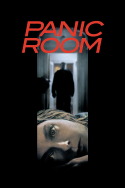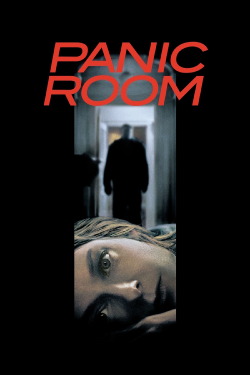
Review of Panic Room (2002) by Theseparator — 11 Jan 2014
In slasher flicks like Scream (1996), break-ins are single scenes. Heist flicks like The Bank Job (2008) or The Score (2001) spend most of the films planning out the break-ins, and then only a scene or two actually carrying them out. So the fact that aside from the very beginning, Panic Room is just really one long break-in scene always made the film seem like a silly waste of time. I mean, it gives the whole plot away right in the title. A couple of thieves arrive and tear up the place, the family hides, problems occur. Hurray.
The coincidence of everything just-so-happening to be available at the exact right time: the happenstance of the break-in coinciding with the idea that the house just so happens to contain a panic room, this seems too much to handle.
Yet all the mighty forces align and provide the viewer with an experience that is actually quite satisfying. Although not an overly complicated plot, the script is very well written and includes explanations for exactly why these happenings occur as they do.
For skeptic viewers like me, who usually find unexplainable exceptional coincidences a deal breakers, David Keopp’s logical, explanatory script (Jurassic Park, Mission Impossible) provides answers, and an excellent foundation for David Fincher to build his dark mess. (IMDB says Keopp got 4 million bucks for the script, so….).
Seemingly, this film takes the primal fear of invasion, bad people coming into our homes in the night and doing bad things to us. But rather than exploit the concept a has been beaten to death, Panic Room does not rely on the traditional fear of invasion. It adds dimension, reason, even a kind of logic explaining how this whole event could have turned out right for everyone, if only it could have unfolded just a single day earlier.
It is in considering the film’s simplicity that the profound difficulty of this film’s production is most realized. The decision for the director and crew to call “that’s a wrap” must have been murky one.
Unlike any of Fincher’s other films, Panic Room is shot entirely on only one set, in linear time, and deals with only with a single event. It is minimal in its approach, like a play. It is essentially all based on the interaction of the actors stage together, almost.
Forest Whitacker, Jodie Foster and even Dwight Yoakam all crank out great performances, but Fincher’s dark, perfectly influential shots, using unusual angles, intercoms and video cameras, small vs. open spaces, and of course, darkness and rain are what make this cinema, and not theater. Aligning open frames with great musical peaks, the score by Howard Shore (Lord of the Rings) intensifies the single track plot of Panic Room, pushing it along as a series of arcs, suspensefully running up and down, each arc increasing in intensity, until the film hits the peak, and even though we knew all along what was coming, we are still very satisfied with when it finally does.
This review of Panic Room (2002) was written by Theseparator on 11 Jan 2014.
Panic Room has generally received positive reviews.
Was this review helpful?