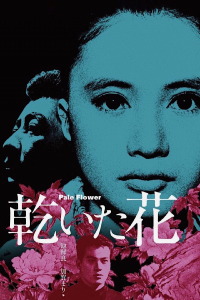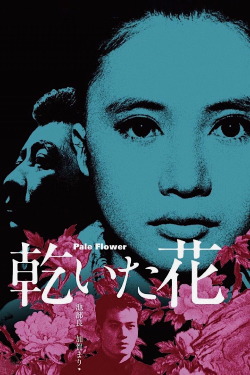
Review of Pale Flower (1964) by Nate A — 19 Nov 2011
Ah, the elegance of noir.
I can't believe I've put off watching some of these Japanese New Wave gangster pictures. They're great!
While the New Wave movement is often more closely associated with French cinema, Japan had it's own avant garde movement. This one pre-dates Melville's 'Le Samourai' by three years and the two have a lot in common.
A recently released yakuza returns, unceremoniously, to his former life. He betrays little emotion and says little. He is in the midst of an existential crisis. There is a great scene early on where he returns to his former lover, who lives in a clock shop. The clocks ticking in the background work like the score and building to an almost deafening crescendo which also emphasizes the ever present nature of time progressing but without progress. What is his identity? He spends the length of the film trying to figure it out. Of course, since it's noir, there's also a woman mixed up in all of this. There is also a pretty strong political allegory working here, with the protagonist representing Japan caught between two struggling powers during the height of the Cold War.
The climax (and the word was never used more appropriately than it is here) is artfully done. No sound; just music. It was so good, I had to rewind it and watch it again. Speaking of music, the soundtrack for this is great. It it's very reminiscent of Bernard Herrman's stuff which just adds to the ambiance.
This isn't as much fun as some of the campier stuff from Suzuki, but if you want a deep, complex, and (for lack of a better word) cool gangster picture, you need look no further than this.
This review of Pale Flower (1964) was written by Nate A on 19 Nov 2011.
Pale Flower has generally received very positive reviews.
Was this review helpful?