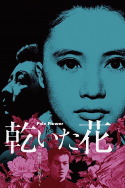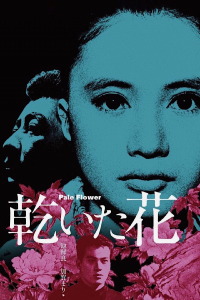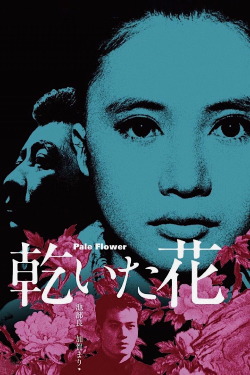
Review of Pale Flower (1964) by Richard D — 31 Aug 2012
A sleek Yakuza film that begins like a dream but swiftly reveals itself as a nightmare. It is a movie about a yakuza recently released from jail named Murakami (played with practiced badassery by Ryo Ikebe) who finds himself first immediately drawn back into the world of underground, big-stakes gambling and then hypnotized by a sexy reckless gambler played by Mariko Kaga, named Saeko (sound that out; in English it's quite appropriate).
Murakami is a man who takes himself very seriously, one who likes to be in control and considers himself quite capable of handling his surroundings, but there is something about these two vices- first gambling, and then this woman- that draw him to their spontaneity, their danger.
The film works because of Ikebe's textured performance, one that starts out looking like a typical piece of gangster nihilism but which quickly becomes something desperate and weak; Ikebe keeps his character under veils during the first act and then unleashes a performance that emphasizes the character's limits and fears.
As Murakami is sucked down a hole of chance and violence, he finds himself overwhelmed and approaching the point of no return, and the film's last act, which focuses on him trying to swim back upstream, is riveting.
The best part of the film is its visuals. Shot by Masao Kosugi, the cinematography has the grace of Kubrick's early work and the invasive visual violence of some of the best noir films ever made. Each shot is full of thick artistry; the visuals are almost distractingly beautiful.
This review of Pale Flower (1964) was written by Richard D on 31 Aug 2012.
Pale Flower has generally received very positive reviews.
Was this review helpful?