Review of Our Hospitality (1923) by Philip C — 19 Apr 2010
There are many reasons why we go to the movies: to laugh, to cry, to be scared out of our skins, to see epic adventures unfold on the big screen, or to see the harsh realities of life played out in front of us. However, the overriding attraction of the cinema for most of us is the chance to be transported into another world, the chance to vicariously experience amazing sights and sounds which are far removed from our daily existence. Buster Keaton fully understood this innate appeal of the art form which he served so well, and his 1924 masterpiece [i]Sherlock Jr. [/i]exploits it to glorious effect.
[i]Sherlock Jr.[/i] is the story of a humble projectionist (Keaton) who dreams of a more exciting life. Whenever he gets a quiet moment he can be found with his nose in a book which is bluntly titled [i]How To Be A Detective[/i], and when he lowers the book from his face we see he sports a fine, bushy moustache which he obviously feels is necessary for any budding sleuth. But in reality he isn?t a great detective or anything like it, and his reverie is brusquely interrupted by the cinema?s manager - ?say Mr. Detective? he says, ?before you clean up any mysteries, clean up this theatre?. Buster morosely starts to go about his business, safely depositing the moustache in his pocket for later use.
Buster?s dreams don?t only concern crime-solving, though, he also has matters of the heart to contend with. His attempts to woo a local girl (Kathryn McGuire) with a nice box of chocolates are stumped by his lack of funds, and his good fortune in finding cash among the cinema?s rubbish is matched by his bad fortune in strangers always turning up to claim their lost property. In a bit of quick thinking, Buster decides to purchase a $1 box of chocolates and doctor the price tag so it reads $4 - surely that will impress the object of his affections - but his rival (Ward Crane) has a similar idea; he steals a pocket watch belonging to the girl?s father (Joe Keaton) and pawns it in order to buy her a more impressive gift. Then, as a final twist of the knife, he frames Buster for the crime. Disgraced and dejected, Buster returns to his projection booth. He sets up the reels for the next screening, and then slowly slips into a deep sleep.
Up until now, the film we?ve been watching has been very enjoyable - well played, laugh-out-loud funny - but it hasn?t been anything remarkable, nothing we haven?t seen from Keaton before. There are some delightful touches in this opening section of the film: Keaton?s continual disappointment as his newly-found dollars get claimed is a beautifully sustained piece of comedy; his nervous attempts to court Kathryn McGuire?s equally nervous young lady have a sweetly romantic tinge; and, as ever, Keaton takes every opportunity to display his flawless comic timing. When he embarks upon his futile attempt to uncover Crane as the real thief, his trusty book tells him to ?shadow your man closely?, and he takes the advice literally, falling into line a foot behind Crane and following him step-by-step as he makes his way through the town. When Crane stops abruptly or stumbles, Keaton follows instantaneously, and when Crane takes one puff of a cigarette before throwing it behind him, Buster catches it without missing a beat and nonchalantly takes a puff himself.
However, while this is all good fun it doesn?t prepare you for the extraordinary events which occur next. While Keaton snoozes in his booth, he ?dreams? himself out of his body and, when he turns to look at the screen, he sees the characters in the movie being played by McGuire, Joe Keaton and Crane. Once again, Crane is in the process of committing a crime and Buster desperately attempts to wake his own slumbering form, but when that fails he decides to act; he runs down the aisle, climbs over the organist and leaps into the movie. But when Buster leaps through the screen to rescue his girl the movie is too quick for him, and he finds himself stranded in a series of quickly changing environments.
The next few minutes are simply jaw-dropping. Buster finds himself at the mercy of some cruel film editor, who cuts to a vastly different milieu just as Buster is about to make a move. He?s about to sit on a log when it disappears from underneath him and he falls into a busy road; he?s about to walk off camera when he finds himself standing precariously on the edge of a cliff; he dives towards the open sea and he lands face-first in the snow. The cuts in this dizzying sequence occur as Keaton is in motion from one position to another, and the effect is seamless. It?s a stupendous piece of cinematic wizardry, and it certainly baffled viewers in 1924, with many of Keaton?s contemporaries in the film world sitting through screening after screening in an attempt to figure out his techniques. The question they were asking is still one which viewers will find themselves asking today - ?how the hell does he do it??.
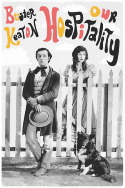
That question pops up a lot when one watches the films of Buster Keaton From his multiple appearances in [i]The Playhouse[/i] to his stunning waterfall swing at the end of[i] Our Hospitality[/i]; from clearing a railway sleeper from the front of a moving train in [i]The General [/i]to his death-defying ?falling house? stunt in [i]Steamboat Bill Jr.[/i] - Keaton pushed the boundaries and stretched himself to the limit with every film he made. Charlie Chaplin is the more iconic figure of the silent era, but Keaton was by far the better filmmaker. He was a perfectionist who really cared about the structure of his films, who experimented with daring shots, and who laboured over the composition of every scene (far from being ?just? a comedy, [i]The General[/i] has often been hailed as one of the most realistic depictions of the civil war). I don?t think any director has ever possessed such a keen understanding of the basic mechanics of comedy, and unlike many silent stars Keaton fully appreciated the comic potential of deadpan acting. He was the clown who never smiled, ?The Great Stone-Face?, and the absence of any theatrical double-takes or even the hint of a smile is what makes his performances so enduring. He really doesn?t seem to see the funny side of his misadventures, and that leaves all the more for us.
Above all else, Keaton was the ultimate physical comedian; a man whose compact body contained extraordinary reserves of strength and athleticism, a man who could seemingly turn that same body to rubber as threw himself across the screen with no regard for his own personal safety (he even broke his neck during the making of [i]Sherlock Jr.[/i], something of which he was unaware until a routine medical picked up on it years later), and it?s his intense physicality which makes the second half of this film such a thrilling ride. As the great Sherlock of his dreams, Keaton finds himself propped on the handlebars of a motorbike, unaware that he unseated the driver some time ago. He frequently tells his nonexistent companion to slow down and drive more carefully as the bike blasts through heavy traffic and various other obstacles, avoiding disaster by the narrowest of margins. In this same section of the film there?s the logic-defying sight of Keaton leaping through a window and coming through the other side dressed as an old lady, and a magical moment when he seems to dive straight through another man?s stomach. As we watch all of this we again ask that old question - ?how the hell does he do it??.
This closest I can come to answering that question is this: Buster Keaton could accomplish these incredible feats simply because he was Buster Keaton, a remarkably gifted individual who was unlike anything cinema has seen before or since. How on earth did Keaton stage the breathtaking billiards game in which he managed to hit a number of wild shots while impossibly missing a specific ball with every one? He achieved it by simply working out the angles and being skilful and precise enough to pull it off. Sure, Buster Keaton used a lot of visual trickery in [i]Sherlock Jr.[/i], but the greatest special effect at his disposal was his own genius.
Every Buster Keaton film has a number of memorable moments, but I think he made three pictures which border on perfection - His most well-known film [i]The General[/i], his debut short [i]One Week[/i] and, of course, [i]Sherlock Jr.[/i] It?s hard to choose between these three magnificent works of art, but for me [i]Sherlock Jr.[/i] has the edge simply because it possesses that special kind of cinematic magic which is just irresistible. Not only does it take us on a fantastic journey which is both utterly thrilling and side-splittingly funny, it?s also a brilliant exploration of our relationship with cinema itself, and perhaps that?s why this film seems so perfect, so timeless. As we watch Buster dream himself into the role of a great detective - performing heroic acts, defeating the villain and winning the heart of the girl - we realise they?re not just his dreams we?re seeing up there on the screen; they?re ours.
This review of Our Hospitality (1923) was written by Philip C on 19 Apr 2010.
Our Hospitality has generally received very positive reviews.
Was this review helpful?