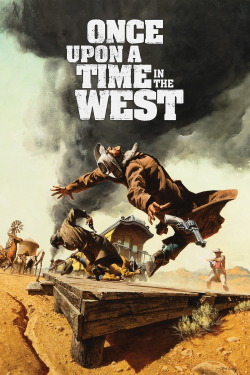
Review of Once Upon a Time in the West (1968) by James W — 16 Jul 2011
Landscapes.
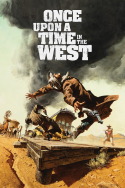
Thatâ??s whatâ??s featured in Sergio Leoneâ??s â??Once Upon a Time in the West.â?? Whether itâ??s the vast, aboriginal spaces of Monument Valleyâ??an affectionate genuflection to the films of John Fordâ??or the intricately chiseled planes of the faces of Charles Bronson and Henry Fondaâ??you spend a lot of time looking at both in â??Onceâ?¦.â??â??as well as deep close-ups of the faces of Jason Robards and Claudia Cardinale. There is one shot where Bronson ever so slowly relaxes a smile out of existence. Bronson does it so subtly you donâ??t know whatâ??s happening until itâ??s happened. Itâ??s one of the things I look forward to in the Dance of Death of â??Once Upon a Time in the West.â?? Here are some others:
1. â??Looks Like Weâ??re Shy One Horseâ?¦â?? The first twelve minutes. A dilapidated train station in the middle of nowhere. Three long-coated bad-men wait for a train. They while away the time, each in their own unique fashion. Driven mostly by sound and filmed in extreme close-ups, the sequence, accompanied by the homely squeak of a windmillâ??one of the out-sized sound effects typical of Leoneâ??s westernsâ??and the jokey placement of the credits, rolls on and on until a confrontation ends explosively. Itâ??s an opening of great economy and intricate film-making. Few words are spoken throughout. Iâ??ve shown students this sequence to show just how much presence and atmosphere simple sound effects can bring to a scene. Hereâ??s the ending of the sequence. Itâ??s just the opening gambit in a plot by two men who are playing against each other. It will take the entire movie to explain why.
2. â??You Donâ??t Know How To Playâ?? The gist of â??Once Upon a Time in the Westâ?? is a chess game with lives and futures as the playing pieces. As scripted by Sergio Leone and his co-scenarists--the soon to be master of Italian horror films Dario Argento and the young Bernardo Bertolucci--the movie is a series of moves and counter-moves by the antagonists, each one trying to tame the frontier in their own way, and taking their own sweet time about it. Each has to make the pieces fall their way. For the first-time viewer it can be maddening following the strategems of the four participants in the story, but by the end the motivations and loyaltiesâ??or lack of themâ??become clear.
3. â??People Scare Easier When Theyâ??re Dyinâ??â?? The villain of the piece is the meanest, rottenest most conniving scumbag to ever walk a dusty street and spit on it. â??Frankâ?? is a sadist who smiles when he kills and for the first time in his life he has a patron with a visionâ??one big enough for Frank to start to see how there might be such a thing as a future, and that one man can own it. He just canâ??t understand why people are getting in his way.
4. â??Instead of Talking, He Plays. And When He Better Play, He Talks.â?? The composer and the director did it backwards. Ennio Morricone wrote the music for the film first and Leone built his sequences around the music, playing it on-set to establish mood. There are two spectacular pay-offs--one in the previously mentioned Monument Valley sequence. But the other is at a train station where Claudia Cardinale, has just arrived from New Orleans to find no one to meet her. After a long wait (which is actually mercifully short for a Leone western) she decides to hire passage. Sounds disappear as she is seen through a station window talking to an official, and then the camera HEAVES up and over the roof, and in a burst of music reveals a burgeoning western town full of life and activity. Itâ??s as if all of America is presented in that one astounding crane shot. My wife audibly gasped when she saw the shot in some movie clip program on TV, so stunning is the effect. And more than a little of the power of that shot is due to Morriconeâ??s music and the angelic voice of Edda Dellâ??Orso, wordlessly cooing an ode to the country and to the protagonist around whom the movie and the future hinges.
5. â??Maâ??am, It Seems To Me You Ainâ??t Caught The Ideaâ?? For the first time in a Leone western, a woman is the hero, but like her predecessorâ??The Man with No Nameâ??she is flawed, and has some learning to do, and itâ??s up to Leoneâ??s trio of men â?? another man with no name using the names of dead men, a wolf-like vagabond-thief, and the villain, Frankâ??to push, prod, blackmail, challenge and coerce her into a new role. Itâ??s a role each man knows theyâ??ll have no part of and that, for a time, she is reluctant to fulfill. In the last shot of the film, she is seen bringing water to the railroad work-crew who will be bringing people and prosperity to what will be her town. It may seem a servile role, but as we pull away and follow the disappearing tracks to the frontier, leaving her to her future, she begins to bark orders, to direct and take charge. Her station will become a cornerstone of the push west. â??This movie drips with testosterone,â?? a colleague once told me after a screening. Yes, but Leone includes a healthy shot of estrogen as, for the first time, he is dealing with a story that not only leaves the past behind, but also looks forward to the future.
This review of Once Upon a Time in the West (1968) was written by James W on 16 Jul 2011.
Once Upon a Time in the West has generally received very positive reviews.
Was this review helpful?