Review of O'Horten (2007) by Gabriel P — 24 Aug 2012
Deep in the barren Hardangervidda, southern central Norway, a train thunders by every so often. What with it being difficult to track down the infrequent ski resorts, villages or even the odd wind-rustled tree around here, the area is mostly silent. It is perhaps apt, then, that O'Horten, Bent Hamer's followup to 2003's sleeper hit Kitchen Stories (Salmer Fra Kjøkkenet), reveals itself to the viewer to a series of near-mute, chiaroscuro shots of engine rooms, stations and tunnels only to suddenly explode out into the open, canyon-carved wilderness of the Hardanger Mountain Plateau. John Eric Kaada's monumental soundtrack theme bellows over the top of a train snaking its way through the flimsy piece of string that is the track, weaving in and out of the rock face with elegance and grandiose. The scale of it all plays out like a winter version of Lawrence of Arabia.
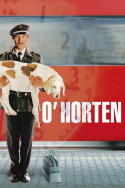
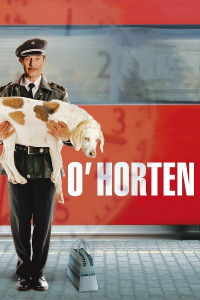
The film, from start to finish, is a simple character study of Odd Horten, driver of said train, a conservative 67 year-old Norwegian man who drags behind him a life of all work and no play. He has nothing to say for himself, let alone his time on the planet. He just has to complete his last ever trip of to-ing and fro-ing between Bergen on the west coast and Oslo in the east, then he can retire into obscurity, to be forgotten, just how he'd like it. On the eve of his retirement, a misunderstanding causes him to be locked out of his own party, and so, climbing through the window of a neighbour, he is stopped by a small boy and appears to befriend him. The film then proceeds to do something totally unexpected.
What is so charming, so clever and so entertaining about O'Horten is that it never stops wheeling out its endless arsenal of random events, leading some to claim it's a take on existentialism and the meaning of life. For instance, Nordahl, the small boy, is in one scene only, and he's never seen again. Bent Hamer's creation here is a series of random events that are seemingly unrelated but, in reality, all have a common link; Horten himself. The events may have happened and the time will have passed without him, but Odd goes through all this mess with us. There are no ups, no downs, nothing truly remarkable happens and yet we still never have a moment to catch our breath. Falling asleep in a sauna, walking the streets of Oslo wearing high heels, meeting a schizophrenic man who believes he can drive blindfolded, selling a boat, ski jumping, swimming with lesbians and being arrested for smoking a pipe in the middle of Gardermoen airport taxiway; you name it, Odd's been there.
Never taking itself too seriously (or seriously at all for that matter), O'Horten plods along from A to Z without any revelations, without drama, without a denouement. What's more, set to the backdrop of urban Oslo (and John Eric Kaada's simply breathtaking score), it barely has any style to speak of. It's not colourful or visually thrilling, but it has something found in all Hamer films - comedic timing. It's got humour by the bucketloads, taking aim at anything from the bizarre, true-to life shortness with which the Norwegians address each other to the totally ridiculous instances of a man's ice-maker flooding his house with ice cubes, two characters starting a conversation with.
"Can you believe Nissan is Japanese?".
"... It certainly doesn't sound Japanese.".
"Maybe if it were Swedish...".
O'Horten is, at heart, a beautiful, heartfelt celebration of humankind; a reminder that life is interesting and exciting without car chases, without murder, without anything really happening at all. Life is entertaining even at its dullest moments, and while some may find this excruciatingly scrutinised vision of the passing time dull or lacking in bite, to me, Bent Hamer has created a sly little comedy using nothing more than the natural humour of, well, people. What they say, how they act, what they do and why. Nothing more, nothing less; whatever goes, goes, and from where the viewer is standing, the film is often heavily unbalanced, completely unstructured and the narrative is totally baffling, but hey, that fits the story, right? We wouldn't have it any other way.
This review of O'Horten (2007) was written by Gabriel P on 24 Aug 2012.
O'Horten has generally received positive reviews.
Was this review helpful?