Review of Off the Map (2003) by Ron S — 09 Oct 2012
Doesn't She Have Any Friends?
I don't exactly know people who lived this kind of life. I know plenty of people who had hippie parents. I know plenty of people who were homeschooled. I know plenty of people who lived one kind of unconventional life or another as children. However, even the craziest of my friends' parents would not have raised their children the way the main character of today's film was raised. They went out of their way to ensure that their children had more social experiences than this character did. Even the hippiest of them still had that perverse belief of some parents that all it will take to be friends with someone is being their approximate age and having parents who have something in common. Still, that's better than isolating their child all but totally, miles from anything, never talking to outsiders of any kind. One of the most painful moments in the movie is her wish that the person from the outside would be different, but he became the same.
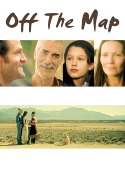
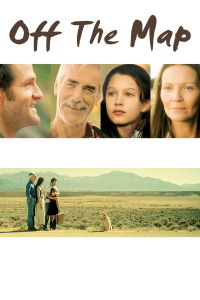
Bo (Valentina de Angelis) is twelve years old, and she lives with her parents on an isolated chunk of land in New Mexico. They get by on only a few thousand dollars a year, mostly veteran's benefits. Her mother, Arlene (Joan Allen), is your typical Earth Mother type, the kind of woman who weeds vegetable gardens naked. Her father, Charley (Sam Elliott), is a Korean War veteran in a severe depression. They have one friend, George (J. K. Simmons), who is also Bo's godfather. Arlene tries to talk him into getting antidepressants for Charley at the VA hospital, which Charley isn't much in favour of. Also, they are being audited by the IRS. Young William Gibbs (Jim True-Frost) is the agent sent to perform the audit. He is stung by a bee and spends three days essentially comatose on their couch, and when he wakes, he throws away his job (which he'd only held for a month) and moves in, now spending his time as a painter.
We know that Bo grows into Amy Brenneman, and there are worse fates. She seems to be a writer, which is a common career for the children of unconventional parents, at least if you believe the movies. It strikes me, though, that all these stories are the children still unable to move out of their parents' shadows. "This is how interesting my parents were." It's never how interesting their own lives are; it's never the things having such unconventional parents let them be able to explore. It's never the good or bad of their later lives unless it somehow involves dealing with their parents again. Bo wants nothing more than to lead a conventional life, or at least a more conventional life than the one she knows. She is fascinated by William's briefcase. She irons his tie while he is unconscious. She is lost and lonely in ways her parents never identify. She writes to snack companies with false claims that there was something wrong with the product in order to get things free; lemon cupcakes don't exactly grow in the garden.
On the other hand, I was mostly pleased with how Charley's depression was shown. He cries, but not constantly. Mostly, he is silent. He locks himself into small, enclosed spaces. He says nothing to his wife or his child. He takes the drugs, because they tell him they will put them in his food if he doesn't. And given that the film is set in 1974, they aren't exactly state-of-the-art antidepressants. It's not improbable that they will have really horrible side effects. He doesn't want to take them, and he ends up resenting it mightily that Arlene is more concerned with giving the drugs to the chickens than to him, though I will point out that even a single pill a week to a chicken is a much higher dosage than a pill a day to a human. Many more adults than most people realize go through at least one incident of this kind of depression in their lives, and maybe seeing Sam Elliott portray it will encourage someone out there to get some help. People have all sorts of triggers, after all.
I think the popularity of this kind of movie, and there are an awful lot of them, is the idea that people would love to go and live out in the middle of nowhere, hardly needing any money at all. It's part of the Great American Dream--living off the land and not needing anyone else. However, I also think there are conflicting American dreams, and this one isn't mine. I have no interest in living off the land. That's a lot of work, and it's not work I enjoy. I also don't think people really put a lot of thought into what this kind of life does to the children. Okay, Bo was hardly the only twelve-year-old in 1974 who didn't know how credit cards work. There are probably kids today who don't know how credit cards work. But does she know how to make friends? She decides that she's going to start school, and I'm glad, but at the same time, there are problems. It's too late for Bo to get some of the basics of dealing with people her own age; she is always going to be different, and not always for the better.
This review of Off the Map (2003) was written by Ron S on 09 Oct 2012.
Off the Map has generally received positive reviews.
Was this review helpful?