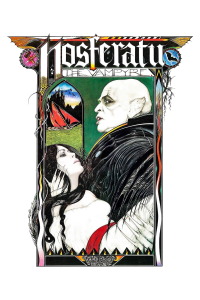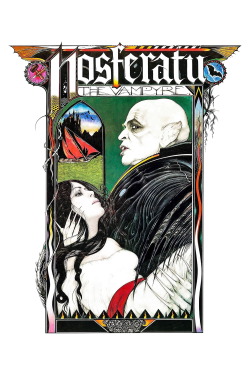
Review of Nosferatu the Vampyre (1979) by Eduardo C — 28 Dec 2009
Why remake a film that was not only flawless to begin with, but easily one of the best and most influential in the history of motion pictures? I don't know. All I can do is experience the final product and gush.
Herzog is one of the undeniable, certifiable geniuses of the past 30-35 years. As the writer-director-producer here he crafts a film that is, first and foremost, haunting and evocative. It carries with it many of the qualities of a dream. Not a nightmare, but a dream. He is famous for his 'voodoo of location' axiom, and it is rarely in display more so than here. The atmsphere that he generates simply by shooting on locations is astounding, but he also makes the locations themselves feel like sets. His shots are tight, sharp, rarely moving. The town feels more like a series of sets than a living, breathing place. This dichotomy makes the film exist on a different plane from most others. I have already called it a dream, but I cannot stress that enough.
Herzog is very respectful of the original and many of the subsequent retellings of the Dracula mythos. There are references to Lugosi ("Children of the night..."), Hammer's Draculas (the muted, pastel colors, some of the wardrobes, the stagey feel and Isabel Adjani looks like a long-lost Hammer scream-queen) and, of course, to Nosferatu itself. Much of the shadowplay not only references the original, but is staggeringly beautiful and effective in its own right. The film's photography, in general, is spectacular. There are shots here, and sequences of shots, that should go down into genre history.
The consistent, subdued score goes a long way toward establishing the ambience from frame 1, and the film's first shot, while completely unrelated to the rest of the film, immediately draws you into this unique world.
Kinski is certainly the saddest of all Draculas (or Orlock's). His performance is so gentle, fragile, moving that all thoughts of the larger-than-life, force of nature performances (Aguirre, Fitzcarraldo) he is more known for dissapear. He generates considerable empathy for the Count, and his can enter the very short list (Max Shrek, Bela Lugosi, Christopher Lee, Frank Langella) of completely original performances as the character.
Is the film better than Murnau's "Nosferatu"? No. Even if it were, it couldn't be. It is not nearly as important, innovative or influential, but it is completely different, reverential, and uses many of the ideas in the original to create a startling new vision. It is a truly great film, surprisingly unknown, that bears experiencing.
This review of Nosferatu the Vampyre (1979) was written by Eduardo C on 28 Dec 2009.
Nosferatu the Vampyre has generally received very positive reviews.
Was this review helpful?