Review of Nosferatu (1922) by Aaron Y — 17 May 2010
Nosferatu is a testament to its tagline- "A Symphony of Terror." There are several elements that make this film one of the most influential and critically acclaimed motion pictures of all-time.
First off, for a silent film to be classified as a horror movie is astounding. Its ability alone to remain suspenseful and terrifying with zero dialogue and a limited score should qualify it as the most important and among the greatest horror productions in the history of film making.
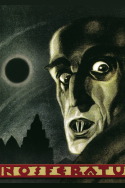
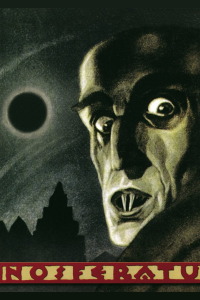
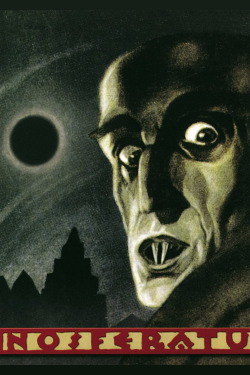
Second, Nosferatu contains more endearing images than almost any other movie ever released. The promotional photo of Count Orlok (the Dracula-like main character portrayed by Max Schreck) standing in the archway of his monstrous castle located deep in the Carpathian Mountains.
Orlok trailing his eerie shadow as he lurks up a set of steps. All movie fans have seen these pictures, some without knowing the film of origin. And of course, as is the case with any noteworthy silent film, the acting is believable and inspiring.
The lumbering Schreck as perhaps the best movie villian of all-time Count Orlok is what solidifies the film's legacy but the supporting cast is honorable as well. Gutsav von Wangenheim, Greta Schroeder, and Alexander Granach all perfectly play their parts in Nosferatu.
Lastly, but certainly not least, F.W. Murnau, the director, made this film his masterpiece. From the selection of the set, the loose adaptation of Bram Stoker's Dracula, and pacing of the film (it is said Murnau used a metronome to gauge the pace of the acting), F.
W. Murnau's work here remains iconic. Mony of his silent films from the period have been lost, but Nosferatu remains and can never be forgotten. Nosferatu is a German film from way back in the silent era, 1922, but it transcends all languages and all generations.
This review of Nosferatu (1922) was written by Aaron Y on 17 May 2010.
Nosferatu has generally received very positive reviews.
Was this review helpful?