Review of Nosferatu (1922) by Ricardo O — 19 Mar 2011
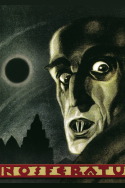
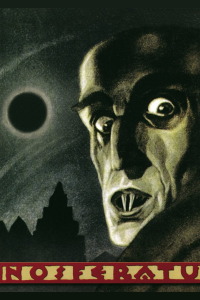
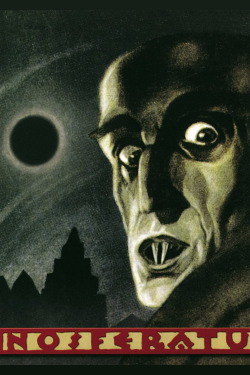
F.W. Murnauâ(TM)s landmark vampire film Nosferatu was the first time that Bram Stokerâ(TM)s classic novel Dracula was adapted. In fact it was more like a direct steal as Murnau did not have the rights to adapt the piece of literature. Stokerâ(TM)s widow went to court, demanding that Murnauâ(TM)s film be destroyed. And destroyed they were. At least most thought they were, but in fact many other prints around the world were still intact, resulting in the film we currently have. A film about a real estate agent Hutter (Gustav von Wagenheim) who goes off leaving his wife behind in the Carpathian Mountains and going off to sell a piece of estate to the reclusive Count Orlok (Max Schreck). Hutter arrives hearing stories about the man he wishes to see but he insists on completing his journey to Orlokâ(TM)s castle. The men that drive him up towards the castle only go so far as they fear of any sinister creatures lurking about. A mysterious carriage comes down from the castle to pick Hutter up and he gets in and heads on up to the castle where he is met with much hospitality from his host. While enjoying a dinner with his host, he accidentally cuts one of his fingers causing Orlok to get up immediately and lick his fingers of blood. Hutter eventually catches on that Orlok is not an ordinary mortal like himself when he witnesses Orlok load himself into a coffin in preparation for his journey to Bremen. The ship carrying Orlok arrives at its destination but the captain and crew have all been killed and at times partially devoured. A wave of mysterious deaths follows through the town of Bremen, which many locals attribute to a plague. But Hutterâ(TM)s wife Ellen knows better, having read Hutterâ(TM)s book of vampires and other sinister creatures. With the knowledge she has gathered from the book, she knows that with the exposure to the rays of the sun, a vampire will die. Ellen offers herself to Orlok, deliberately keeping him distracted until sunrise. Ellen sacrifices her own life ending Orlokâ(TM)s reign of terror forever.
Because Murnau did not have the rights to Stokerâ(TM)s novel, Murnau changed the names of the main characters; Dracula was changed to Count Orlok, Harker was changed to Hutter, and Renfield was changed to Knock. Nosferatu is the film that brought one of German cinemaâ(TM)s masters to incredible international attention. Nosferatu was not only the first adaptation of Stokerâ(TM)s novel, but quite arguably the greatest screen version of the story. Unlike the other expressionist techniques of using artificial sets, Murnau instead settled on using actual Central European locations to film his vampire tale, creating an intensely eerie gothic mood to the film through cinematic techniques as negative exposures, stop-motion photography, and impressive compositions. Photographed by Fritz Arno Wagner, who would later work with the likes of Fritz Lang (Spies; M; The Testament Of Dr. Mabuse) and G.W. Pabst (Diary Of a Lost Girl; Westfront 1918; Kameradschaft), he uses dramatic shadows and low angles that make Max Schreckâ(TM)s presence all the more menacing, especially with the incredible makeup used to make Orlokâ(TM)s character all the more believable. The low angles used in the film would eventually have a large influence on Orson Welles and his cinematographer Gregg Toland when they made Citizen Kane. Many feel that the stop motion effects used in the film have not aged very well but I personally believe it makes the film all the more creepy. Yet even if some of the techniques havenâ(TM)t aged well, the influence the film has had on movies that have come out since is incalculable. It set the template for horror films that followed becoming one of the greatest films to ever come out of the silent era. It is a masterwork delivered by one of cinemaâ(TM)s greatest artists who would later make the Oscar winning Sunrise. Nosferatu is an essential film to watch for all movie fans, especially those that love horror films. 10/10.
This review of Nosferatu (1922) was written by Ricardo O on 19 Mar 2011.
Nosferatu has generally received very positive reviews.
Was this review helpful?