Review of Network (1976) by Kylie P — 24 Oct 2009
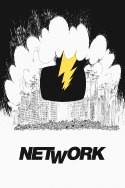
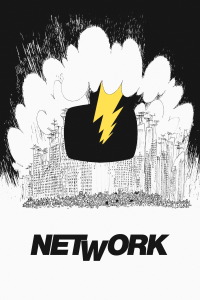
Network is a cynical, ascerbic, and visionary film that is complex in its many layers. It's all satire--barbed, pointed, sharp, and merciless--but there are so many different edges to the satire, Network almost loses track of where the barbs are aimed, and, in some ways, the film, as brilliant as it is, fails to obtain that masterpiece status because the sly bullets are being shot in six different directions at times when maybe only three or four bullets should have been shot at the same target.
The screenplay by Paddy Chayefsky is about as brilliantly written as any great screen story, and the film's focus on the Network's inner cogs was when the film was at its tightest and strongest. The fact that the film took aim at sensationalist programming, which has only become more prevalent in the 21st century, makes the film more prophetic than even the filmmakers probably knew in 1976. All of the little jokes, from sly comments made by the executives to the visual gags, to the poignant conclusion of the film, serve to take well-deserved knocks at the television industry and contemporary news broadcasts, otherwise known as the "media," and there are times when the film is laugh-out-loud funny because of the sheer irony of what is being targeted and how it is being portrayed. There are also times when the giggles arise from the squirm factor, as the film clearly broaches the line and stretches it without ever crossing it.
Yet, the film lost its sting some when it veered into the Max and Diana tryst, for several reasons. It's problematic that the only "evil" executive being given a full character wash was the only female of the bunch, the "Eve" shall we say, and the conclusion made by the Max character was that she was essentially nothing but a (five-letter word), myopically focused on her career and the ratings that define it. It's also problematic that the Max character was clearly meant to be the voice of morality and ethics, even in a reactionary way, but that he did this after making a knowingly immoral choice. It's further problematic that the implication here was that Diana's character seemed to be symbolic of the alleged influence that television has on society and society has on television, and the neverending cycle it perpetuates, or so the filmmakers would have the film's viewers believe. In basic terms, the implication is that Diana is TV and Max is society, and he strays from his wife amidst the pixellated glow of excitement that Diana seems able to offer him, only to have Max realize in the end that she is two-dimensional and, therefore, not real or, further, not everything she is cracked up to be. The whole story seemed distracting to the overall satire, lacked both the comedic and dramatic punch that the rest of the film provided, and presented as inherently sexist.
Also, the performances were a bit of a mixed bag. Finch and Holden could not have been finer. Finch had to play a stark-raving lunatic with some semblance of relatability to a public hungry for someone or something to love, at least for the moment, and he deserved his posthumous Oscar (he passed away just before the film was released and was the only actor to have this distinction, until Heath Ledger's death in 2008). Holden had to play the only quiet, understated character in the entire piece, the voice of the "every man," and he did so with grace and believability. Faye Dunaway gave a great performance, and her trademark theatrics served this character well. She was depicted to be the most unlikeable of the bunch, and yet, she gave the character some charm and occasional emotion making her more three-dimensional, at least at the outset, than she was allowed to be in the end.
Still, other performances left something to be desired. Many of the characters shouted everything, bringing new definition to the phrase "on the air." Most of the supporting characters, such as the people in the recording room, were a bit ham-fisted and forced. There seemed to be many loose threads in all of the different scenarios that were not completely sewn together by director Sidney Lumet. On the other hand, to say the film was ahead of its time would be an understatement. If the film had focused entirely on the progression of Beale without taking the side trip into Max and Diana's particular love affair, it probably would have been a masterpiece, since their tryst had little effect on the overall story other than to provide a deeper, slightly esoteric commentary on television as a whole in comparison to the chides hurled by the rest of the picture at a certain type of programming. Yet, Network is nothing short of in-your-face and is recommendable as long as the potential viewer remembers that nothing in the television world is safe from this picture (nor are some elements from outside that world).
This review of Network (1976) was written by Kylie P on 24 Oct 2009.
Network has generally received very positive reviews.
Was this review helpful?