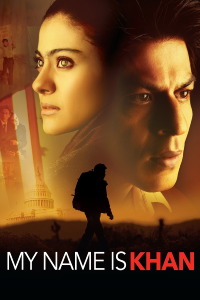
Review of My Name Is Khan (2010) by Osman R — 27 Mar 2010
My Name is Khan: Bollywood is not Bollywood.
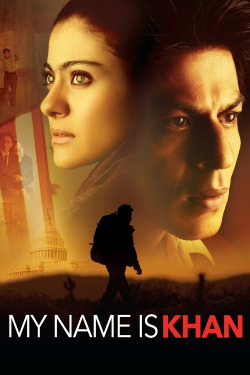
The problem with making a film like this is that it sets itself up for criticism from the get-go, and the case has been as such since its release: no, in fact, since before its release. We know, or should know, the stories involving Mr. Shahrukh Khan and the United State's Airport Security and also, the political heavyweights from his country of birth, and we must discard them. They bear no worth on the film critically, besides, perhaps, in elucidating a political tone, which, let's face it, does not need elucidating. Mr. Karan Johar's My Name is Khan wears no disguises, and it throws only punches; it parades itself as a proud political manifesto of what's good in the world and what's bad, of why hate fosters and how, and of the racial and social mishaps of American society following what has since been called '9/11.' This film is like a round of drunken boxing: sluggishly thrown heavyweight punches, some hitting the target, some missing; where the intent is to leave a lasting mark but the technique sadly, at times, inadequate. However, this criticism is particularly framed to suit just the political coda of the film, to criticise that would not be to criticise the film exactly but its message (and of what worth is that in an essay evaluating the film?) It is by no means a generalised assault on the picture as a whole, which by the virtue of its composition, performances and what Mrs. Rachel Saltz, writing in the New York Times, calls crudely, "emotionalism," succeeds in advancing and in enriching and in defining and in presenting Indian film. Bollywood is not Bollywood, and this film makes the case for that: it is the Mumbai Film Industry, not that vulgar, imitative and so inferior --wood, and it demands acknowledgment as that. It is not the first film to make the case or to inspire the backlash: look to Shahrukh Khan's previous endeavour as Mohan Bhargava in Swades (2004), to Mr. Rakeysh Omprakash Mehra's picture Rang De Basanti (2006) or to Mr. Sanjay Leela Bhansali's Black (2005), and others, although not many, but too word-consuming to mention. What My Name is Khan does -- shall we say -- more forcefully is that it pushes contemporary issues to the forefront, be they of political injustice and terrorism, prejudice and racism, natural disasters and catastrophe, disability and craziness, religion and theology, good and bad, right and wrong, love and hate, determination and will, and, to not go overboard, human solidarity.
Karan Johar, working with Shibani Bathija's hit-and-miss screenplay, isn't making something from nothing: quite the opposite, in fact. He makes something from a lot. We found a similar story of thematic multiplicity -- which, on a side note, always exists but is highlighted here because of its prominence -- in Kabhi Alvida Naa Kehna (2006) but there it is handled slightly worse, here it is handled somewhat better. The undoing of Johar's forward-thinking but backwardly made Kabhi Alvida Naa Kehna, obviously minus the ludicrous performances, in particular Mr. Amitabh Bachchan's standout nonsense, is the inability to keep all the thematic plates spinning at the same time. The plates fall, they crash to the floor, and the resounding echo must have dented Johar's growing ego. Not the most gifted of film-makers but certainly a visionary: he returns often, following mini-hiatuses, to breathe fresh air into an Industry his family helped build. Kabhi Alvida Naa Kehna, I thought, back in 2006, was Karan Johar's (and excuse me if I patronise) "coming-of-age" movie: had he matured as a film-maker? (Whatever, that is, "matured" might mean.) If we understand "matured" as of greater experience, as of a director finding comfortable footing, and as of leaving the security of the pictures which made him, then Kabhi Alvida Naa Kehna was puberty and My Name is Khan is the man on the other side. Yes, indeed, this film is thoughtful. It is not, as those multitude of pathetic Khan-haters would have you believe, a mechanistic money-spinner but a passionate picture of victimization, understanding and redemption. See, for instance, the attention Johar pays to being a Muslim around not just other people but other Muslims as well, an important arousing of the message that '9/11' was an attack on the world, not just the Christian world, not just the Secular world, and not just against certain peoples. The dispute over the Abraham fable in the Mosque, by which Johar displays the susceptibility of religion to misinterpretation (if we make the admission that "good" can exist in religion, but that is a separate essay), succeeds in making a point of Muslim as not just Muslim: there are good Muslims and there are bad Muslims, just as there are good Christians and bad Christians, just as there are good Atheists and bad Atheists. I allude to these other subjects of "good" and "bad" because the film does, and this is Johar's ecumenicalism: the Abraham story, to take as a single example, is not restricted to Islam but extends to Christianity and even Judaism. The handling of this theologically delectable fable is as engrossing and dramatic as those debates we see Christopher Hitchens dominate (which, incidentally, is many.).
The point being made is that thematically the film isn't tokenistic: at the very least, the director cares. Aspergers is presented not as a disability but as an ailment, a point so subtle it has almost gone unsung; it does not distinguish Khan's character, Rizwan Khan, from the crowd but just makes him different, like people are. And Shahrukh is different. Often billed as the popular face on the wall of every girl in India and the one of the most popular, if not the most popular, actor in the world, it is not surprising that the man is as susceptible to criticism as the film. Whatever the Indian film Industry is today, is partly in thanks to Shahrukh Khan, and, on the sad day he dies, part of this Industry will die with him. The fate of a film like this rests in the hands of its main player: he is the main player, he is a success, and so the film, as it naturally follows, is also a success. Okay, one must make the admission that this formula isn't always true or accurate, but here it is. Khan's performance will make those who haven't seen him wonder: Why haven't I seen this guy before? For those who know him, they will see the face of that same imperishable star of Indian, with who they are comfortable and accustomed, and they will see the artist doing his work. This is true of Shahrukh Khan, the actor, as it is of Steven Spielberg, the director. Each have a mode, or mindset. Movie: for Khan, see Om Shanti Om (dir. Farah Khan, 2007); for Spielberg, Indiana Jones and the Kingdom of the Crystal Skull (2008). Film: for Khan, see Swades; for Spielberg, Munich (2005). If there is any discrepancy as to my definitional difference between a movie and film, think of a movie as a blockbuster or a pop-corn flick, and a film as you would that writing which we commonly call Literature (with a capital 'L'.) Khan reputedly stayed in character at all times, including whilst at home, and if this dedication isn't revealed to you on the Silver Screen, at least you'll be able to appreciate the fact that he must have got a neck-ache. As for the others, there is little to say. They do the job. Mrs. Kajol Devgan, which still runs funnily from the lips, plays her part well and to her usual standards: her dramatic pieces, or as some other than I would say, melodramatic pieces, are where she feels most comfortable and this is an observation made from the quality of those scenes. The rest, as it were, is history. Even if the co-performers and the supporting actors would have been a grade higher in quality, it wouldn't have mattered. Like I said, the film is Khan's.
To take the film to the chopping-board, stylistically, by which I refer to the technical matters of its construction and the elements of its make-up, we may first divert our attention to the history of Johar's production house, Dharma Productions. As a film-maker, Johar has always been preoccupied with style, or with what we shall call the aesthetic ('style' being too loose term). The aesthetic of Johar's pictures is their visual vitality, the beauty, the colour, and the carefulness of composition. They reflect the rapidly growing vanity of a film industry obsessed with looks, whereas before, their concern was -- and to some extent, still is -- star-power. Here, however, it works. People talk of a "Bollywood film" and part of this construct involves the quality and the style of the shots projected on the screen; if we allow this reading, and accept it as valid, we can so confidently say that My Name is Khan escapes these distinctions. The name of the lens of the camera reads like an American one, the beauty to the cinematography is a sweet mixture between the colourfulness of the Indian picture and the polished quality of the American one. This is more of an observation, rather than a criticism. Magic, in My Name is Khan, besides in the performance, is also to be found in the cutting-room. That is, at least, for the first two acts of the picture. It begins pieced together delicately and smoothly, finding a rhythm and sticking to it, and allowing a comfortable and smooth transition from a wonderfully told comedic snapshot to another, working in the drama and the tension, and still finding room for the subplots. By the third, however, it begins to slip: scenes become clunked clumsily together, which is indeed as much a scriptural error as an editorial one (for this, see the laughable hurricane scenario.) As far as the songs of the film are concerned, I can only say that there are not enough to complement the images. What we have is a few, and the few are good. I wonder what repelled Johar from the inclusion of, and certainly from the staging of, more songs. I earnestly hope it wasn't the Western audience. This short stylistically-minded paragraph hopes to convey that Johar isn't a bad film-maker, no, to the contrary, in fact. Johar is a good film-maker who makes films with one hand on the wheel. And this is not to say he makes them easily or dangerously. This is to say that both hands should be controlling the wheel but, unfortunately, due to artistic and filmic shortcomings, one hand slips away.
The notes in my Journal, fresh from the first viewing, read as follows:
"Indian films should not have to -- nor indeed need to or aspire to -- cater to the desires of the Western audience and change who and what they are in order to fulfil the filmic expectations of others. My Name is Khan does not sell-out, fortunately, even though at times one cannot help but be suspicious. This film is at its strongest when it refuses to be an imitation, at the moments where Mr. Johar contains his, and indeed his fraternity's, infamous tendency to divulge in extreme sentimentality and, instead, releases it in concentrated doses. The making of this film is also its unmaking: the narrative's readiness to engage, but not just at one level, at multiple levels, at the same time. If we picture each thematic aspect of the narrative as a box, by the end of the first two acts, we have a carefully stacked tower of boxes: so far so good. But, as we know, the higher the tower of boxes, the most susceptible they are to fall. And they do. It is difficult for one to ignore the slump that is the final act, although, if possible, if we could remain aloof from it, I'd think we'd opt to. This is for the beauty and the charm of the first two acts; worth remembering is that My Name is Khan wears no disguises, and it throws only punches; it parades itself as a proud political manifesto of what's good in the world and what's bad. The strongest punch it lands, however, is that concerning the Mumbai Film fraternity as much more than just that construct of "Bollywood". Shahrukh Khan has the capacity to change the face of Cinema: he's done it before, he's doing it now, and, without any doubt, he will do it in the future.".
This review of My Name Is Khan (2010) was written by Osman R on 27 Mar 2010.
My Name Is Khan has generally received very positive reviews.
Was this review helpful?