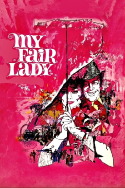
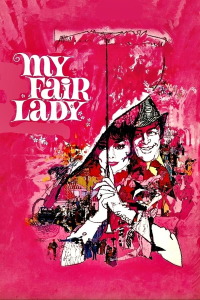
Review of My Fair Lady (1964) by Harry W — 17 Jun 2014
Although musicals aren't easy at please me, due to the amount of Academy Awards given to My Fair Lady, it sounded like it was worth a viewing.
My Fair Lady isn't exactly my kind of film because it is a music with the premise about essentially an extreme makeover with romantic undertones, and none of those are of any interest to me. I mean, a musical film involving a love story and giving someone an "extreme makeover" are all of little interest to me, but the simple fact that My Fair Lady was so critically acclaimed convinced me to keep on watching.
The social commentary in My Fair Lady is good. The way that the upper class characters automatically they assume to be superior and feel that they must teach the "inferior" to act like them is a theme that reflects mainly into the real world. Although the film is a rather cheesy and glamourous musical which skips over this theme, many of the scenes where it puts comedic emphasis on the nature of Eliza Doolittle in comparison to her upper class surrounders reveal a cultural difference. The entire film is about how society is more likely to expect someone to change than it is to accept who they are, so in its own clever way My Fair Lady is actually a pretty deep film. It just feels rather shallow because it is a corny and cheesy romantic story which is full of glamourous imagery. It embodies the style of classical musicals and therefore its appeal is not as relevant today which meant that I was easily able to pick out a lot of flaws in it. Overall, I enjoyed My Fair Lady. I did not enjoy it for its story which was cheap and unappealing tale despite some of its underlying depth, and I did not find the music to be that catchy either, but it was a good film.
My Fair Lady has to battle age as difficultly as a lot of musical films, and considering that this one is a prime example of the cheesy nature of the genre, it is understandable if its appeal would have sunk today. But if you look closely at the film, you can see how it serves as an allegory for society's tendency for wanting to change people against their own better judgement. It asks the question of what education is in comparison simply to glamourisation, as in what is intelligence in comparison to class. The fact that the character Eliza Doolittle was seen as a person who needed to be changed serves as both an example of how someone can seriously change when they set their mind to it, but also the fact that she shouldn't have to simply to fit in with the crowd of upper class snobs who essentially treat her with disrespect simply for being different. I was surprised just how deep My Fair Lady ended up being under the surface, and so it proves to maintain the same meaningful values and virtues that came from its original source material, Pygmalion. Although My Fair Lady is a shallow and glamourised musical, it does have some meaningful subject matter which makes it a worthy viewing.
And in terms of stylishness, My Fair Lady is built on a glamourous production design and costumes which establish the time period of the film very nicely and make it feel genuine. The scenery is also beautiful, and it is captured with very nice cinematography which is smooth and allows the audience to view a lot of the lush design of the film, so the glamourous visuals in My Fair lady are effective as well.
And to match it all is a very talented cast.
I struggled to notice Audrey Hepburn in her role at first because her voice articulation and appearance is so different to the usual level of sophistication that she brings to films. And she is befitting to the role excellently. As the titular Lady, Audrey Hepburn manages to inject an organic charm into the role which makes her a very sympathetic figure, and although her singing voice had to be dubbed, her lip-syncing is near perfect. Audrey Hepburn is a very charming lead presence in My Fair Lady, and so it is easy for many viewers to find themselves "accustomed to her face" as Rex Harrison would sing.
Rex Harrison is also terrific. Singing with an excellent voice, Rex Harrison manages to portray a stereotypical upper-class ponce very well. He has a certain sense of egotism to him which makes him a bit of a stuck up person, but the fact is that it is difficult not to sympathise for him simply because Rex Harrison's natural comedic charisma is infectious. His dedication to his role and to the script is very strong, and he never sinks out of character or stops until the end of his performance which has him carrying it to the end. Rex Harrison is great in My Fair Lady, and the complexity in his chemistry with Audrey Hepburn suggests that the two critically acclaimed actors are learning from each other in the experience of making the film, and it just makes it all the more better.
Stanley Holloway was also great as Alfred P. Doolittle and Gladys Cooper was a nice tough in her supporting role as Mrs. Higgins, so the entire cast in My Fair Lady makes a firm and effective effort.
So although My Fair Lady has had to battle age and remains an example of Hollywood musicals during the most popular age with all the shallow glitz and glam that made it a popular genre, the story in My Fair Lady is actually fairly meaningful underneath all of its great visual elements and the cast is very dedicated to the piece so it is a mostly entertaining film which does raise some valid points in the minds of viewers who are able to think deeply into what it is saying about society.
This review of My Fair Lady (1964) was written by Harry W on 17 Jun 2014.
My Fair Lady has generally received very positive reviews.
Was this review helpful?